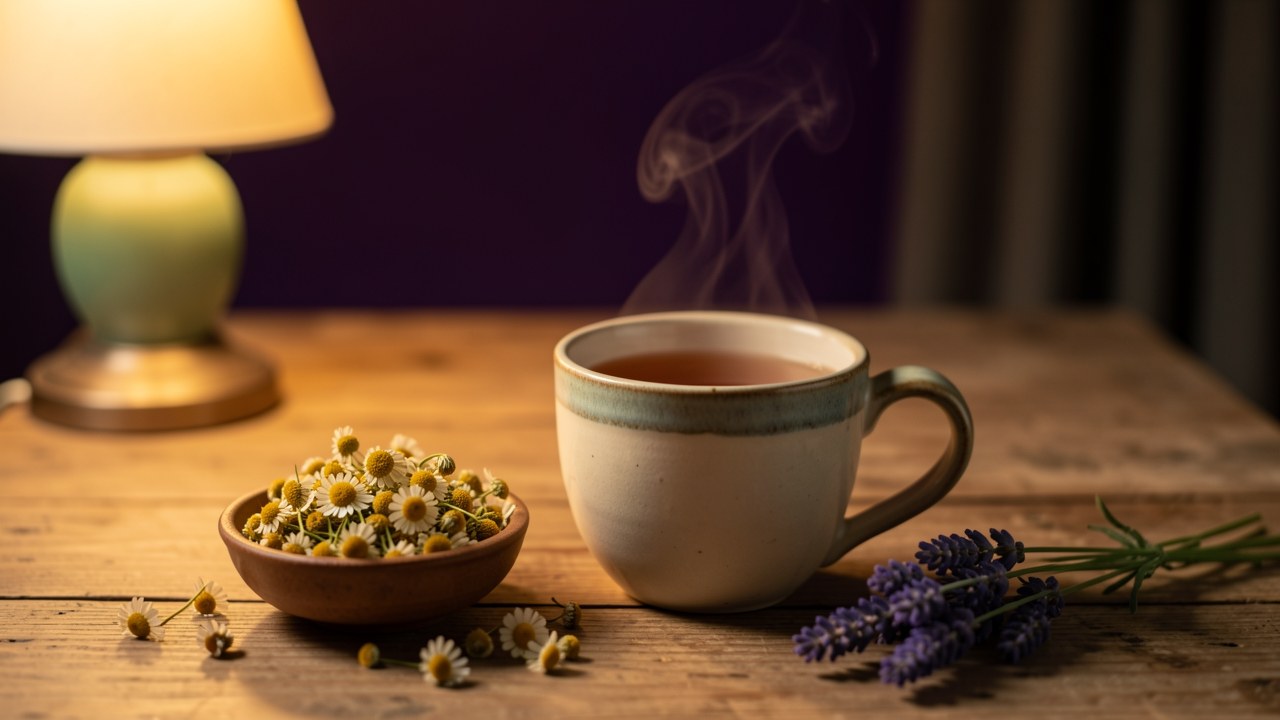
What Are Herbal Teas for Relaxation?
Herbal teas for relaxation are caffeine-free infusions made from dried flowers, leaves, roots, or seeds of calming plants. Unlike true teas from the Camellia sinensis plant, these brews offer a soothing ritual that can help signal your body it's time to slow down.
For centuries, people across cultures have turned to herbal teas to support relaxation, digestion, stress relief, and sleep. Today, they remain a popular choice for those seeking a natural way to ease into the evening.
This page is your starting point for exploring how these gentle drinks can become a meaningful part of a calm nightly routine.
Sources: Sip Herbals Blog
Key Herbs for Relaxation and Sleep
Several herbs are especially favored for their calming properties. Each brings its own character and traditional use to your cup.
Chamomile is among the most beloved choices. Its mild, apple-like aroma and gentle flavor make it a classic for evening sipping. Valerian root, with its earthy taste, has a long history as a sleep and stress aid. Passionflower offers a slightly grassy note and is often chosen for its potential to ease anxiety. Lavender adds a floral, aromatic touch that many find soothing, while lemon balm contributes a light citrusy hint and is used for both calming and uplifting effects.
- Chamomile: Popular for relaxation, often part of bedtime rituals.
- Lavender: Noted for stress relief and relaxation.
- Lemon balm: Used to calm and uplift, may help with relaxation and sleep.
- Valerian root: Traditional sleep and stress aid.
- Passionflower: Contains flavonoids that may help reduce anxiety.
Sources: Catalyst Tea Company, Sip Herbals Blog, Sleep Foundation
Why Choose Caffeine-Free Teas
Many herbal teas are naturally caffeine-free, which makes them an ideal choice for the evening hours. Caffeine is a stimulant that can interfere with relaxation and sleep, so opting for an infusion without it helps your body wind down more easily.
By choosing a caffeine-free herbal blend, you avoid the alertness that caffeinated drinks can bring, allowing your evening routine to truly support rest.
Sources: Sip Herbals Blog
Quick Start: How to Brew Your First Cup
Brewing a relaxing herbal tea is simple. Start with fresh, cold water and bring it to a boil. Then, pour the hot water over your chosen tea—whether loose leaf in an infuser or a pre-portioned tea bag.
Let it steep for the recommended time, usually 5 to 10 minutes depending on the herb and your taste preference. Covering your cup while steeping helps retain the aromatic oils.
Here are easy steps for a perfect cup:
- Heat fresh water to a rolling boil (212°F / 100°C).
- Place one tea bag or one teaspoon of loose herbal tea in a mug.
- Pour 8 ounces (240 ml) of boiling water over the tea.
- Steep for 5–10 minutes, covered, to your desired strength.
- Remove the tea bag or strain the leaves.
- Sip slowly and enjoy the calming aroma.
Sources: Catalyst Tea Company, Sip Herbals Blog
Explore Our Guides
Our detailed guides provide deeper knowledge on brewing techniques, evening routines, individual herbs, and creating your own blends. Use the links below to continue your journey:
Visit our How to Brew guide for more on water temperature and steeping methods. The Evening Routine article offers ideas for weaving tea into a wind-down ritual. For profiles of individual herbs, see our Herb Guide. If you're inspired to craft your own mixtures, explore How to Make Relaxing Tea Blends. And to learn about our mission, check the About page.
Frequently asked questions
Are herbal teas safe to drink every night?
For most people, drinking caffeine-free herbal teas in the evening is a safe and soothing habit. However, some herbs, such as valerian root, may not be suitable for everyone, especially if you are pregnant, nursing, or taking certain medications. It's always wise to consult with a healthcare provider about any herbs you plan to use regularly.
Sources: Sleep FoundationWhat is the difference between herbal tea and regular tea?
Regular tea comes from the leaves of the Camellia sinensis plant and contains caffeine, while herbal teas are infusions of other plant materials—flowers, roots, seeds, or leaves—and are naturally caffeine-free. Common examples of regular teas include black, green, and oolong, whereas herbal options include chamomile, peppermint, and rooibos. Because they lack caffeine, herbal teas are often preferred for evening relaxation.
Sources: Sip Herbals BlogSources
- How to Choose Herbal Teas for Body and Mind Relaxation — Catalyst Tea Company
- 5 Best Herbal Teas for Relaxation and Calm - Sip Herbals Blog — Sip Herbals Blog
- The 7 Best Teas for Insomnia — Sleep Foundation