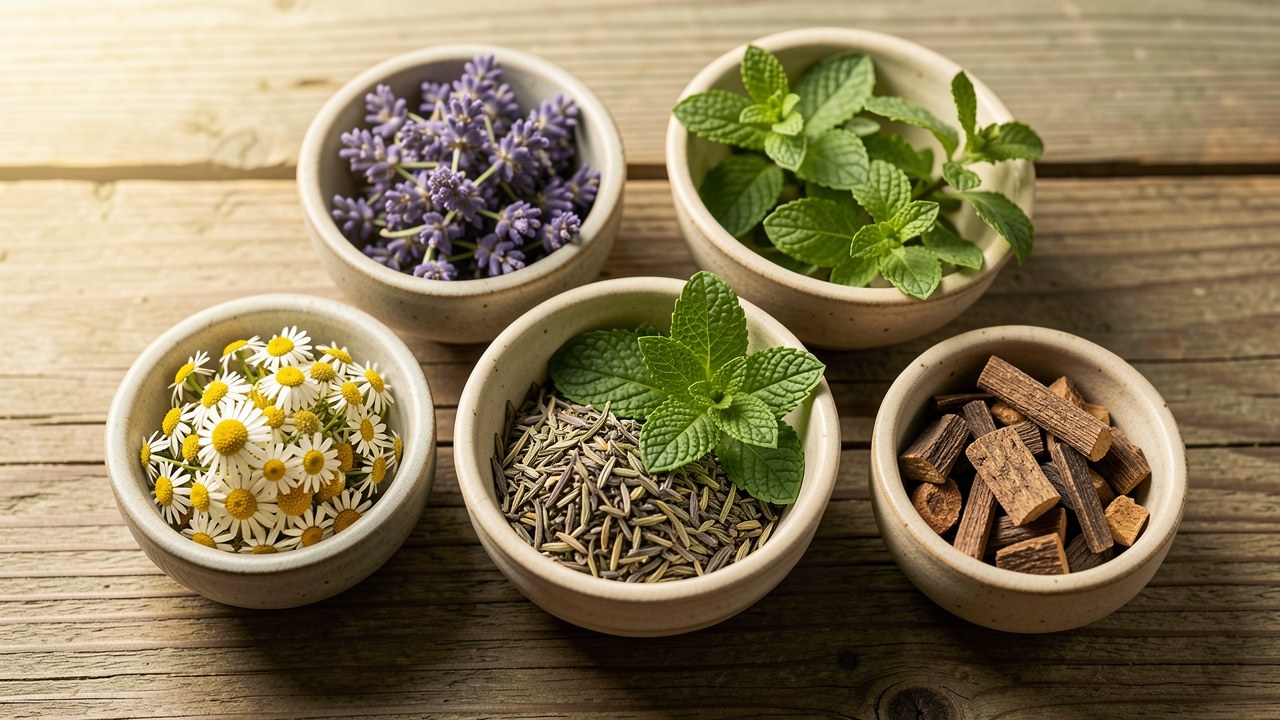
Popular Calming Herbs Overview
Many people turn to a warm cup of herbal tea as part of a calm evening routine. The herbs below are among the most commonly used for relaxation and sleep support, each with its own character and traditional use.
Chamomile is widely known for its apple-like, floral flavor and has a long-standing place in bedtime tea traditions. Lavender, with its fragrant, soothing aroma, often appears in evening blends. Lemon balm, part of the mint family, has a light lemony taste and a history of use for easing nervous tension. Valerian root offers a more earthy, woody flavor and is usually blended with other herbs to balance its strong character.
Passionflower is another herb traditionally used to calm the mind and encourage sleep, especially when racing thoughts interfere. Peppermint, while refreshing and cooling, is often included in herbal tea routines for its digestive support. Tulsi (holy basil) is sometimes mentioned as an adaptogen, an herb traditionally used to help the body adapt to stress.
- Chamomile: floral, subtly sweet, apple-like
- Lavender: floral, lightly herbaceous, fragrant
- Lemon balm: light, lemony, herbaceous
- Valerian root: earthy, woody, herbal
- Passionflower: traditionally used for sleep support
- Peppermint: cooling, refreshing, minty
- Tulsi: adaptogenic, traditionally used for stress
Sources: Mark T. Wendell Tea Company, Bar's Loaded Coffee Co., Grace Walk Farm (YouTube), Sencha Tea Bar, Leigh A. Frame, PhD, MHS (Facebook post)
Herb Flavor and Traditional Use Table
Knowing what each herb tastes like can help you choose a tea that fits your preferences. The table below summarizes the flavor, caffeine-free status, and traditional use of the most common calming herbs. Aroma is not included because reliable comparisons are limited.
| Herb | Flavor | Caffeine-free | Traditional use |
|---|---|---|---|
| Chamomile | Floral, subtly sweet, apple-like | Yes | Relaxation, sleep support |
| Lavender | Floral, lightly herbaceous | Yes | Calming, relaxation |
| Valerian root | Earthy, woody, herbal | Yes | Nighttime herbal blends |
| Peppermint | Cooling, refreshing, minty | Yes | Digestive support |
| Lemon balm | Light, lemony, herbaceous | Yes | Stress and anxiety relief |
| Passionflower | Not specified in available sources | Yes | Sleep support, calming racing thoughts |
Sources: Mark T. Wendell Tea Company, Bar's Loaded Coffee Co., Sencha Tea Bar, Leigh A. Frame, PhD, MHS (Facebook post)
Herbs Commonly Used in Relaxation Blends
Many relaxation tea blends combine a few of these herbs to create a balanced cup that is both flavorful and calming. For instance, valerian root's strong earthy taste is often softened by blending it with chamomile or lavender.
While each herb can be enjoyed on its own, mixing them allows you to tailor the taste and effect. However, if you are new to herbal teas, it is wise to try one herb at a time to see how your body responds.
Some common combinations include valerian root with chamomile or lavender to balance its earthy flavor. You can also experiment with chamomile and lemon balm for a gentle, calming cup, or add a hint of peppermint for a refreshing note, though its strong flavor can dominate a blend.
- Valerian root with chamomile or lavender to balance its earthy flavor
- Chamomile and lemon balm for a gentle, calming cup
- Peppermint for a refreshing, cooling twist
Sources: Mark T. Wendell Tea Company, Bar's Loaded Coffee Co.
How to Use This Guide
This guide is designed as a starting point for exploring calming herbs for tea. Use the table above to compare herbs by flavor and traditional use, then visit the individual herb profiles for more detail.
When preparing a relaxing tea, consider your personal taste preferences and any health considerations. If you are pregnant, nursing, or taking medications, it is especially important to check with a healthcare provider before using herbal teas medicinally, as some herbs may not be recommended.
Remember that herbal teas are generally considered safe for most people when consumed in moderate amounts, but individual responses can vary. Start with a single herb to see how you feel, and always follow package instructions or the advice of a qualified professional.
- Use the table to compare herbs at a glance.
- Visit individual profiles for deeper details.
- Consult a healthcare provider if pregnant, nursing, or on medication.
- Try one herb at a time to see how it affects you.
Sources: Mark T. Wendell Tea Company, Bar's Loaded Coffee Co., Dr. Eric Berg (Facebook post)
Caffeine and Calming Herbs
Most herbal teas are naturally caffeine-free because they are made from the leaves, flowers, roots, or seeds of plants that do not contain caffeine. This makes them a suitable choice for an evening wind-down.
However, not all herbal teas are caffeine-free. A few plants, such as guayusa, yerba mate, and guarana, do contain caffeine, and teas made from these will provide a stimulant effect rather than a relaxing one.
When shopping for a relaxation tea, check the label to confirm it contains no caffeine. Chamomile, lavender, valerian root, peppermint, lemon balm, and passionflower are confirmed caffeine-free, so they can be part of a calming evening routine without keeping you awake.
- Chamomile, lavender, valerian root, peppermint, lemon balm, and passionflower are caffeine-free.
- Yerba mate, guayusa, and guarana contain caffeine.
- Always check the label if you need a caffeine-free option.
Sources: Mark T. Wendell Tea Company, Sencha Tea Bar
Sources
- 7 Best Herbal Teas for Relaxation, Sleep, and Stress Relief — Mark T. Wendell Tea Company
- Best Herbal Teas For Relaxation: Your Guide To Calm — Bar's Loaded Coffee Co.
- 5 Best Herbs for Stress & Anxiety: Calming Herbal Tea Recipe — Grace Walk Farm (YouTube)
- How To Find The Best Caffeine-Free Tea: Breaking Down Flavors and Type — Sencha Tea Bar
- Herbal teas have been used traditionally... - Leigh A. Frame, PhD, MHS — Leigh A. Frame, PhD, MHS (Facebook post)
- Pregnant? Avoid these six types of herbal tea! — Dr. Eric Berg (Facebook post)