What Lemon Balm Is and Why It Has Been Used for Calm
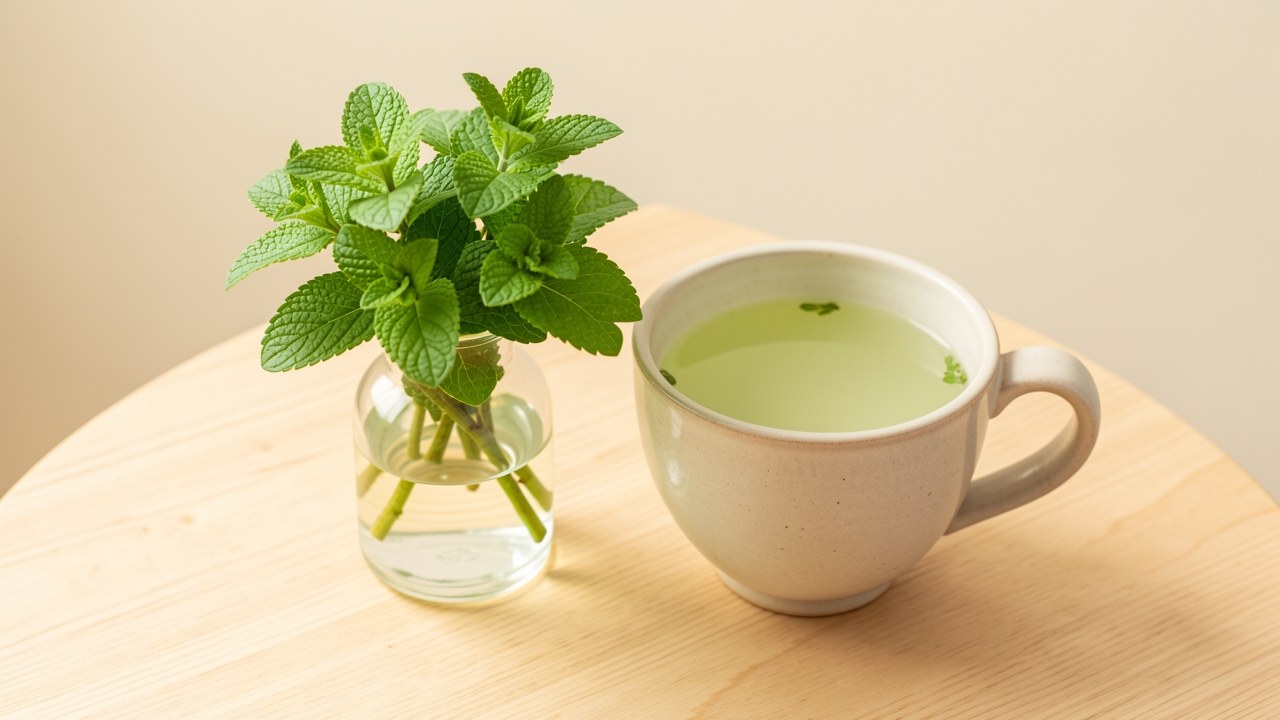
Lemon balm is the herb Melissa officinalis L., a member of the mint family (Lamiaceae). It is native to the Mediterranean region and has since been cultivated and naturalized across Southern Europe, North Africa and Western Asia. Its leaves carry a light citrus scent that has made it a kitchen and garden herb as much as a medicinal one.
The plant's medicinal record stretches back roughly two thousand years, with references appearing around 300 B.C. and later in Dioscorides' De Materia Medica around 50–80 B.C. Over that long history it has been used traditionally to ease digestive complaints, encourage relaxation and sleep, lift mood, soothe skin irritation, and support wound healing. Its standing in formal herbal references is reflected in its inclusion in the British Herbal Pharmacopoeia, the European Pharmacopoeia and the Iranian Herbal Pharmacopoeia.
In folk and traditional practice, lemon balm has been used as a calming herb for anxiety, stress and mild low mood, and for nervous digestion, headaches and restful sleep. That traditional reputation is the reason it appears in so many evening tea blends today, including combinations with valerian root.
- Botanical name: Melissa officinalis L., family Lamiaceae.
- Key phytochemicals include rosmarinic acid, citral, oleanolic acid and ursolic acid.
- Because it is not made from Camellia sinensis leaves, lemon balm tea is naturally caffeine-free and suits evening consumption.
- Traditional uses in the historical record center on calm, sleep and digestion rather than on any single acute effect.
Sources: Nutrients (MDPI), via PubMed Central, Full Leaf Tea Company, Examine.com
How Lemon Balm May Support Relaxation and Sleep
The most concrete mechanism described in the pharmacological literature involves GABA, the brain's main inhibitory neurotransmitter. Rosmarinic acid, along with ursolic acid and oleanolic acid, inhibits the enzyme GABA transaminase (GABA-T), which is the enzyme that breaks GABA down. In animal work, GABA-T activity in aged rats was reduced after doses of 50 to 200 mg per kilogram over five weeks.
This mechanism is supported mainly by animal and cellular studies. Lemon balm and its components appear to modulate GABAergic, cholinergic and serotonergic signalling in preclinical work, which is a reasonable basis for further study but is not the same as demonstrated clinical benefit in people.
The human evidence base is genuinely promising but modest in scale. A 2024 narrative review in Nutrients concluded that lemon balm holds promise as a calming agent exhibiting anxiolytic and antidepressant properties and sleep quality enhancement, while also calling for further robust randomized controlled trials using standardized extracts. The same review notes that few robust clinical trials have been published, and that several studies of middle-aged adults combined lemon balm with other herbs such as valerian, which makes it harder to attribute sleep improvements to lemon balm alone.
Two specific trials are worth naming because they are frequently cited. A 2023 double-blind, randomized, placebo-controlled trial published in Frontiers in Pharmacology enrolled 100 healthy adults with emotional distress and poor sleep and reported improvements in depression, anxiety, stress and sleep quality compared with placebo after 400 mg per day of a phospholipid-bound lemon balm extract for three weeks. A 2024 crossover randomized controlled trial in Nutrients reported that 87 percent of treated participants reported improved sleep versus 30 percent in the placebo group. The numbers are striking, but the wise reading is that they are interesting signals rather than settled conclusions, especially because the trials used concentrated extracts rather than a simple tea.
- Lemon balm is caffeine-free, so it will not work against you the way a caffeinated drink can in the evening.
- The proposed calming mechanism involves slowing the breakdown of GABA, but that evidence comes mostly from laboratory and animal models.
- The 2024 review describes lemon balm as promising for calm, anxiety and sleep quality while calling for more rigorous trials.
- Some sleep studies combined lemon balm with valerian, so results may not reflect lemon balm on its own.
- Trial results come from standardized extracts, not from a standard cup of tea.
Sources: Nutrients (MDPI), via PubMed Central, Examine.com, Mattress Miracle (retailer blog, Ontario, Canada), Full Leaf Tea Company
Storing Dried Lemon Balm
Most people brewing lemon balm for relaxation use the dried leaf, because it is available year-round and measures consistently. Dried lemon balm has a slightly deeper, more mellow herbal character than the fresh plant, with a softer and earthier aroma. Fresh leaves are brighter and lighter, with a clearer citrus edge, but they are at their best within a few days of harvest and gradually lose moisture and fragrance even when refrigerated.
Because dried herbs are more concentrated after losing their moisture content, recipes generally call for less dried herb than fresh when substituting between the two forms. No single conversion ratio fits every recipe, so it is best to start with the amount a recipe specifies and adjust by taste.
Proper storage matters more than most people expect. When dried lemon balm is kept in an airtight container away from direct sunlight, it retains its potency for about a year and remains the most practical preservation method for tea and pantry use. One source also recommends harvesting leaves before the plant flowers, on the reasoning that rosmarinic acid content is highest at that stage, and drying them in a warm, airy space out of direct sunlight.
| Form | Aroma and flavor | Best use window | Shelf life | Suitability for tea |
|---|---|---|---|---|
| Fresh lemon balm | Brighter, lighter citrus aroma and flavor; soft, tender leaves | During the growing season, when leaves are readily available | Best used within a few days after harvesting; refrigerated leaves gradually lose moisture and fragrance | Bright citrus notes, fresh garden aroma and a light, delicate flavor |
| Dried lemon balm | Slightly deeper, more mellow herbal character; softer, earthier aroma | Available year-round from storage regardless of season | Can be stored in airtight containers for many months while maintaining good quality | Convenient, consistent flavor year-round, easy storage and simple measuring |
Sources: Calhoun Farmstead, Mattress Miracle (retailer blog, Ontario, Canada)
Step-by-Step Brewing Guide for Lemon Balm Tea
Brewing lemon balm is simple, but small choices make a real difference in how the cup tastes and smells. The guidance below reflects one commonly cited traditional-style preparation: about 1.5 to 2 grams of dried leaf per 240 milliliters of water (roughly one cup), steeped covered for 10 to 15 minutes and drunk 30 to 60 minutes before bedtime when the goal is sleep. Treat that as a sensible starting point rather than an established clinical dose; a second source suggests a shorter steep of 5 to 7 minutes, so anywhere in that range is reasonable and you can adjust to your own taste.
Covering the cup during steeping is recommended by the source that gives the longer steep time, on the reasoning that lemon balm's volatile compounds, including citral, evaporate in steam and are better retained under a lid. Citral is indeed named as a key component of the herb, and the underlying chemistry is plausible even though the specific preparation advice is not independently confirmed elsewhere.
A single cup is the standard evening serving. One source cites traditional herbal medicine guidelines, including a Canadian regulatory monograph, as allowing up to about 4.5 grams of dried lemon balm leaf per day, which works out to roughly two to three cups. That upper range comes from a single source and should be read as that source's stated range, not as a universal daily limit.
- Warm a cup or small teapot so the water does not cool too quickly.
- Measure about 1.5 to 2 grams of dried lemon balm leaf, roughly one to two teaspoons depending on the leaf cut, into an infuser or strainer.
- Heat fresh water to just below a boil, around 200 to 210 degrees Fahrenheit.
- Pour about 240 milliliters (one cup) of the hot water over the leaf.
- Cover the cup or pot to help retain the aromatic compounds.
- Steep for 10 to 15 minutes, or as little as 5 to 7 minutes if you prefer a lighter, more delicate cup.
- Remove the leaf, then sip it 30 to 60 minutes before bedtime if you are using it as part of a wind-down routine.
Sources: Mattress Miracle (retailer blog, Ontario, Canada), Full Leaf Tea Company, Nutrients (MDPI), via PubMed Central
How Lemon Balm Compares to Chamomile and Other Relaxing Herbs
Lemon balm sits in a crowded field of evening herbs, and the most common comparison people make is with chamomile. The two are often described as working through different routes. One source contrasts chamomile's apigenin, which is thought to bind to GABA-A receptors, with lemon balm's rosmarinic acid, which inhibits GABA-T and thereby slows GABA breakdown. That contrast is a mechanism sketch rather than a head-to-head clinical comparison, and the evidence does not establish that one herb outperforms the other for relaxation or sleep.
What can be said more confidently is how the herbs differ as a drink. Lemon balm brings a bright, citrus-mint character that some people find more refreshing than the apple-like sweetness of chamomile, and it is naturally caffeine-free like chamomile. Because lemon balm is frequently blended with valerian root in commercial sleep teas, a blend you buy may deliver more than lemon balm alone. Whether that combination is meaningfully better than lemon balm by itself is not established by the available evidence.
If you are choosing among relaxing herbs, the practical approach is to let flavor and your own response guide you, and to try one herb at a time so you can tell what is actually helping. Our broader herb guide and sleep tea overview cover other options if you want to compare more than one.
- Lemon balm is often paired with valerian root in sleep blends; the mixture is common, but its superiority over lemon balm alone is not established.
- Both lemon balm and chamomile are caffeine-free and suitable for evening use.
- The chamomile-versus-lemon-balm mechanism contrast is a hypothesis, not a proven ranking.
- Trying one herb at a time makes it easier to judge what works for you.
Sources: Mattress Miracle (retailer blog, Ontario, Canada), Nutrients (MDPI), via PubMed Central, Examine.com, Full Leaf Tea Company
Side Effects: Who Should Use Caution
Lemon balm has a long history of food and tea use, and one source states that it is classified as Generally Recognized As Safe by the US FDA for culinary and medicinal herb uses. That classification is asserted by a single commercial source and no FDA page is included in the material behind this article, so it should not be treated as verified regulatory status. More useful for everyday decisions is the list of groups that a medically reviewed health source advises to consult a doctor before using lemon balm: people who are pregnant or breastfeeding, children, people taking sedatives, and people with thyroid disorders.
On interactions, the picture is precautionary rather than quantified. One source describes theoretical interactions with sedatives and thyroid medications as unlikely but possible at standard tea doses, meaning roughly 1.5 to 2 grams per cup once nightly. The concerns are additive sedation if you take prescribed sedatives, anxiolytics or antihistamines, and additive effects if you take thyroid medication. A separate medically reviewed source states that lemon balm may interfere with the action of thyroid hormones and that a person should consult their doctor before taking lemon balm with thyroid hormones. No source provides an interaction threshold or a measure of clinical magnitude, so the right move is to ask a pharmacist or physician rather than to estimate your own risk.
Chronic sleep problems deserve a medical conversation regardless of what is in your teacup. If you are taking prescription medication, are pregnant or breastfeeding, have a thyroid condition, or have ongoing difficulty sleeping, speak with a qualified healthcare professional before making lemon balm a nightly habit.
This article is informational only and is not medical advice.
- Consult a doctor before use if you are pregnant or breastfeeding.
- Consult a doctor before giving lemon balm to children.
- People taking sedatives, anxiolytics or antihistamines should ask about additive drowsiness.
- People with thyroid disorders or taking thyroid medication should ask before regular use.
- Standard tea doses described here are about 1.5 to 2 grams per cup, once nightly.
- Seek medical advice for persistent sleep problems rather than self-treating indefinitely.
Sources: Mattress Miracle (retailer blog, Ontario, Canada), Medical News Today (medically reviewed by Amy Richter, MS, RD; written by Peter Morales-Brown)
Frequently asked questions
Can lemon balm tea help with anxiety?
The evidence is promising but not conclusive. A 2024 narrative review in Nutrients concluded that lemon balm holds promise as a calming agent with anxiolytic and antidepressant properties, while noting that few robust clinical trials have been published and calling for further randomized controlled trials with standardized extracts. A 2023 placebo-controlled trial of 100 healthy adults with emotional distress and poor sleep reported improvements in anxiety and stress after three weeks of a concentrated lemon balm extract, but that study used an extract rather than tea and its results have not been independently corroborated in the sources behind this article. Traditional use and some clinical signals point in the same direction, but lemon balm tea is not an established treatment for anxiety. If anxiety is affecting your daily life, talk with a qualified healthcare professional.
Sources: Nutrients (MDPI), via PubMed Central, Mattress Miracle (retailer blog, Ontario, Canada)How much lemon balm tea should I drink before bed?
A commonly cited traditional-style preparation for sleep is a single cup made with about 1.5 to 2 grams of dried leaf in 240 milliliters of water, drunk 30 to 60 minutes before bedtime. One source states that traditional herbal medicine guidelines, including a Canadian regulatory monograph, allow up to roughly 4.5 grams of dried leaf per day, which is about two to three cups, but that upper range comes from a single source and should be treated as that source's stated guidance rather than a universal limit. These amounts are preparation guidance, not an established clinical dose, and individual responses vary. If you take medication or have a thyroid condition, check with a pharmacist or physician first.
Sources: Mattress Miracle (retailer blog, Ontario, Canada)Does lemon balm tea interact with thyroid medication?
A medically reviewed health source states that lemon balm may interfere with the action of thyroid hormones and advises consulting a doctor before using lemon balm alongside thyroid hormones. Another source describes additive effects with thyroid medications as theoretically possible at standard tea doses of about 1.5 to 2 grams per cup once nightly. No source provides a specific interaction threshold or a measure of how large the effect might be, so this is a precaution rather than a quantified risk. If you take thyroid medication, speak with your prescribing doctor or a pharmacist before drinking lemon balm tea regularly.
Sources: Medical News Today (medically reviewed by Amy Richter, MS, RD; written by Peter Morales-Brown), Mattress Miracle (retailer blog, Ontario, Canada)What does lemon balm tea taste like?
Lemon balm tea is mild and herbaceous with a soft citrus note. Dried lemon balm, which is what most tea is made from, has a slightly deeper and more mellow character than the fresh plant, while fresh leaves are brighter with a lighter citrus aroma. Some people notice a gentle mint-like quality because lemon balm belongs to the mint family. It is naturally caffeine-free, so it does not carry the bitter edge that over-steeped true teas can develop; if your cup tastes weak, a slightly longer steep will usually help more than adding leaf.
Sources: Calhoun Farmstead, Full Leaf Tea CompanyCan I drink lemon balm tea every night?
For most healthy adults, a nightly cup fits within the traditional-use pattern described by one source, which cites guidance allowing up to about 4.5 grams of dried leaf per day, roughly two to three cups. However, that figure comes from a single source and is not an established clinical limit. If you are pregnant or breastfeeding, are giving it to a child, take sedatives, antihistamines or thyroid medication, or have a thyroid condition, check with a healthcare professional before making it a nightly routine. If your sleep problems persist despite a consistent wind-down habit, that is a reason to see a doctor, not to keep increasing the amount you drink.
Sources: Mattress Miracle (retailer blog, Ontario, Canada), Medical News Today (medically reviewed by Amy Richter, MS, RD; written by Peter Morales-Brown)How long should I steep lemon balm tea?
Sources differ, which is a sign that this is a matter of taste rather than a fixed rule. One recommends steeping covered for 10 to 15 minutes, while another suggests 5 to 7 minutes. A shorter steep gives a lighter, more delicate cup; a longer one draws out a fuller herbal flavor. If you use the longer steep, cover the cup, because lemon balm's aromatic compounds, including citral, can escape in the steam. Start in the middle of the range and adjust from there.
Sources: Mattress Miracle (retailer blog, Ontario, Canada), Full Leaf Tea CompanyIs lemon balm tea the same as chamomile tea?
No. They are different plants with different flavors and different proposed mechanisms. Lemon balm is Melissa officinalis, a mint-family herb with a citrus-mint character, while chamomile is a daisy-family flower with a sweeter, apple-like profile. One source contrasts chamomile's apigenin, thought to bind to GABA-A receptors, with lemon balm's rosmarinic acid, which inhibits the enzyme GABA-T and slows GABA breakdown. That contrast is a hypothesis about how each herb might work, not evidence that one is more effective than the other. Both are caffeine-free and both are used in the evening.
Sources: Calhoun Farmstead, Mattress Miracle (retailer blog, Ontario, Canada), Nutrients (MDPI), via PubMed Central, Full Leaf Tea CompanySources
- Clinical Efficacy and Tolerability of Lemon Balm (Melissa officinalis L.) in Psychological Well-Being: A Review — Nutrients (MDPI), via PubMed Central
- Research Breakdown on Lemon Balm - Examine — Examine.com
- Lemon balm tea: Types, benefits, and more — Medical News Today (medically reviewed by Amy Richter, MS, RD; written by Peter Morales-Brown)
- Complete Guide to Best Lemon Balm Tea | Mattress Miracle — Mattress Miracle (retailer blog, Ontario, Canada)
- What is Lemon Balm Tea? - History, Benefits, and More — Full Leaf Tea Company
- Fresh vs. Dried Lemon Balm: Which Is Better? — Calhoun Farmstead