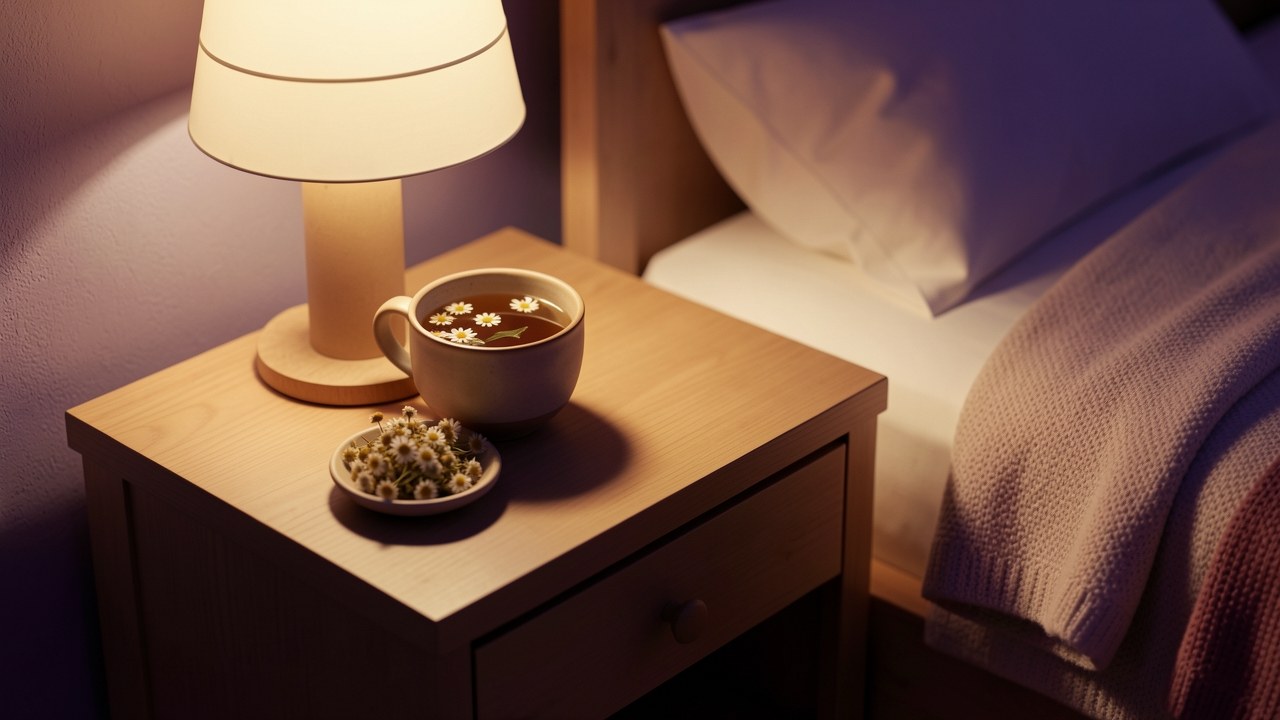
How herbal teas can support sleep
A cup of herbal tea rarely works like a switch. Its value usually comes from a combination of small effects: a warm drink, a few quiet minutes away from screens, and plant compounds that may nudge the nervous system toward relaxation. Chamomile, valerian root, lavender, lemon balm and passionflower are the herbs most commonly cited for sleep and relaxation, and each has a slightly different character.
That said, the research on these herbs is described as limited by major health sources. Studies tend to be small, and results vary from person to person. Preparation strength, how much you drink, and your own physiology all seem to matter. The most honest way to think about herbal tea for sleep is as one gentle piece of a broader wind-down routine, not as a proven cure.
- Herbal tea is caffeine-free in most cases, with exceptions such as yerba mate and guayusa.
- The ritual itself, not only the herbs, can help signal to your body that the day is ending.
- Effects are usually mild and may take consistency over several nights to notice.
Sources: Sleep Foundation, Cleveland Clinic, Floèm
Chamomile: the classic sleep aid
Chamomile is the tea most people picture when they think of a bedtime cup. It contains apigenin, a flavonoid that binds to benzodiazepine receptors in the brain and has a mild tranquilizing effect. That mechanism is one reason chamomile is often described as a gentle relaxant rather than a strong sedative.
Some studies have reported improved sleep quality with chamomile tea, including reduced physical fatigue and depressive symptoms in postpartum women. An older-adult study also showed positive results. Still, the overall body of research is limited, and chamomile is best treated as a mild option that suits many people rather than a powerful sleep treatment.
- Best for: mild relaxation and a gentle bedtime routine.
- Flavor: light, floral and slightly sweet, easy to drink without added sugar.
- Watch out if: you are allergic to plants in the daisy family, including ragweed, chrysanthemums, marigolds and daisies.
- Medication note: chamomile may interact with blood thinners such as warfarin and with immune-system medications such as cyclosporine, so check with a clinician if you take either.
Sources: Sleep Foundation, Cleveland Clinic, Texas Health Resources
Valerian root: a stronger sedative option
Valerian root is often positioned as the more potent herbal tea for sleep. The tea is made from the plant's dried roots rather than its flowers. Valerian is native to Europe and Asia but has spread to parts of North America. Its sedative compounds include valepotriates and sesquiterpenes.
In one study, nearly 90 percent of people reported improved sleep after drinking valerian tea, though that single result should be read with caution because independent confirmation is limited. Valerian is more likely than chamomile to produce noticeable drowsiness, which is both its appeal and its main caution.
- Best for: people who want a more noticeable sedative effect and are not taking interacting medications.
- Possible side effects: vivid dreams, headaches, stomach upset, uneasiness, or drowsiness the next morning.
- Important interaction: combining valerian with prescription sleep medications, benzodiazepines, opioid pain medications, muscle relaxers, sedating antihistamines, or alcohol may increase the risk of extreme sleepiness, slowed reflexes, dizziness, confusion, or falls.
- Taste: earthy and somewhat bitter; many people blend it with mint or chamomile.
Sources: Sleep Foundation, Cleveland Clinic, Texas Health Resources
Lavender and lemon balm: gentle relaxants
Lavender and lemon balm sit closer to chamomile on the intensity scale. Lavender tea is associated with reduced anxiety and improved relaxation, and some studies suggest better sleep quality. One study found that people drinking lavender tea reported feeling less fatigued than a control group, but after four weeks there were no significant changes, which suggests lavender may work best as a short-term comfort rather than a long-term solution.
Lemon balm, also known as Melissa officinalis, is a member of the mint family and may help reduce symptoms associated with insomnia. It is often chosen by people who feel restless rather than wide awake at bedtime. Research on lemon balm is still emerging, so treat it as a pleasant, low-risk experiment rather than a guaranteed fix.
- Lavender: floral and calming; useful when anxiety or mental churn is the main obstacle.
- Lemon balm: mild, citrusy and mint-like; a good fit for restlessness before bed.
- Both are generally considered gentle, and lavender has been recognized as safe by the FDA, though that does not rule out individual sensitivity.
Sources: Sleep Foundation, Cleveland Clinic
Other herbs to consider (passionflower, hops)
Passionflower contains flavonoids that bind to the same brain receptors as benzodiazepines and may reduce anxiety. Evidence suggests that even a single cup of passionflower tea can help with sleep. In one capsule study, its effects were comparable to sleep medication, which makes it one of the more interesting options in this group, though the research is still not definitive.
Hops is often paired with valerian. One retailer source suggests that a combination of valerian, hops and passionflower may reduce nighttime awakenings and insomnia severity within a few weeks. That claim is not independently confirmed by the health organizations reviewed here, so it is best read as supplementary context rather than a certainty.
- Passionflower: may calm anxiety and support sleep, with some evidence for single-cup effectiveness.
- Hops: traditionally used in evening blends, most often alongside valerian.
- Blends: convenient, but check the label so you know which herbs and how much of each you are actually drinking.
Sources: Sleep Foundation, Herbal Concept
Choosing the right tea for your needs
There is no single best herbal tea for sleep for everyone. The right choice depends on how your nights tend to go and what you are already taking. A comparison of the main options can make the decision clearer.
If you are new to bedtime teas, start with one herb rather than a blend. That way you can tell whether it helps and whether it agrees with you. If you take prescription medication or have a health condition, review the choice with a clinician before making it a nightly habit.
| Herb | Primary sleep benefit | Key safety concern |
|---|---|---|
| Chamomile | Gentle sleep aid and relaxation; may improve sleep quality | Avoid if allergic to daisy family plants; may interact with blood thinners and immune-system medications |
| Valerian root | Sedative effect; may reduce time to fall asleep | May cause vivid dreams, headaches, stomach upset, or next-morning drowsiness; interacts with sedating medications and alcohol |
| Lavender | Relaxation and reduced anxiety; may improve sleep quality short-term | Generally recognized as safe by the FDA; no specific interactions listed in the sources reviewed |
| Lemon balm | May reduce insomnia symptoms; helps with restlessness and anxiety before bed | Not specifically flagged in the sources reviewed |
| Passionflower | May reduce anxiety and help with sleep; a single cup may improve sleep | Not specifically flagged in the sources reviewed |
Sources: Sleep Foundation, Cleveland Clinic, Texas Health Resources
Tips for a soothing bedtime tea routine
Timing matters as much as the herb. A common suggestion is to drink your tea about 30 to 60 minutes before bed, which leaves room for the ritual to settle in and for the drink to be absorbed. If waking to urinate is a problem for you, it may help to finish your cup a couple of hours before bed instead.
Keep the rest of the routine simple and repeatable. Dim the lights, put your phone aside, and let the steeping time be a small pause rather than one more task. Reading the packaging label is also worthwhile, since not every tea marketed for evening is caffeine-free.
- Choose one herb or a simple blend, and check the label for caffeine.
- Boil fresh water and steep according to the package directions, usually a few minutes.
- Drink the tea 30 to 60 minutes before bed, or earlier if you tend to wake to urinate.
- Pair the cup with a low-light, screen-free wind-down.
- Give it several nights before deciding whether it helps.
Sources: Cleveland Clinic, Floèm
side effects
Herbal teas are not risk-free just because they are natural. Chamomile can trigger reactions in people with daisy-family allergies and may interact with certain medications. Valerian is the one most likely to cause next-day drowsiness and to interact dangerously with sedating drugs or alcohol. Anyone who is pregnant or breastfeeding, or who takes prescription medication, should ask a healthcare professional before using these teas regularly.
It is also important to keep expectations realistic. Herbal teas are not a cure for insomnia. If sleep problems persist for a week or two or start interfering with daytime functioning, medical help is recommended.
- Check with a clinician if you take blood thinners, immune-system medications, sedatives, or pain medication.
- Avoid valerian on the same evening as alcohol or other sedating substances.
- Stop using a tea if it causes headache, stomach upset, or unusual grogginess, and seek advice if symptoms continue.
Sources: Cleveland Clinic, Texas Health Resources
Frequently asked questions
How long before bed should I drink herbal tea?
A common suggestion is to drink it about 30 to 60 minutes before bed, which gives you time to relax and lets the drink settle. If you tend to wake during the night to urinate, finishing the cup a couple of hours before bed may suit you better.
Sources: Floèm, Cleveland ClinicCan I drink sleep tea every night?
Many people do, and the herbs discussed here are generally used as part of a regular evening routine. That said, chamomile may interact with blood thinners and immune-system medications, and valerian can interact with sedating drugs and alcohol. If you take medication or have a health condition, check with a clinician before making it a nightly habit.
Sources: Cleveland Clinic, Texas Health ResourcesWhich herbal tea is strongest for sleep?
Valerian root is usually described as the more sedative option, and one study reported that nearly 90 percent of people felt their sleep improved after drinking valerian tea. Chamomile, lavender and lemon balm tend to be gentler. Individual responses vary, and the overall research on all of these herbs is limited.
Sources: Sleep Foundation, Cleveland ClinicAre there any herbs to avoid for sleep?
Avoid chamomile if you are allergic to daisy-family plants such as ragweed, chrysanthemums, marigolds or daisies. Be cautious with valerian if you take prescription sleep medications, benzodiazepines, opioid pain medications, muscle relaxers, sedating antihistamines, or drink alcohol, because the combination can increase drowsiness, slowed reflexes, dizziness, confusion or falls.
Sources: Cleveland Clinic, Texas Health ResourcesCan herbal tea replace sleep medication?
No. Herbal teas are not a cure for insomnia and should not be used as a substitute for prescribed treatment. If sleep problems last a week or two or interfere with your daytime functioning, medical help is recommended.
Sources: Cleveland ClinicDo all herbal teas for sleep contain no caffeine?
Most herbal teas are naturally caffeine-free, but there are exceptions, including yerba mate and guayusa. Reading the packaging label is a simple way to confirm what is in the blend before you drink it in the evening.
Sources: Floèm, Cleveland ClinicWhat other herbs are used in sleep blends?
Passionflower is one of the more studied options and may reduce anxiety while helping with sleep. Hops is often combined with valerian, and one retailer source suggests a valerian, hops and passionflower blend may reduce nighttime awakenings within a few weeks, though that specific combination claim is not independently confirmed by the health organizations reviewed here.
Sources: Sleep Foundation, Herbal ConceptWill one cup of herbal tea be enough to notice a difference?
Not necessarily. Some evidence suggests a single cup of passionflower tea can help with sleep, but for most herbs the effects tend to be mild and may become more noticeable with consistent use over several nights. Preparation strength and individual physiology also play a role.
Sources: Sleep Foundation, Cleveland ClinicSources
- The Best 7 Teas for Sleep — Sleep Foundation
- Restless? Try These Bedtime Teas for Better Sleep — Cleveland Clinic
- Herbal Teas That Can Affect Your Medications — Texas Health Resources
- Top 4 Herbal Teas for Better Sleep and Deep Relaxation — Floèm
- Natural Sleep Aids: Herbal Teas and Essential Oils for Better Sleep — Herbal Concept