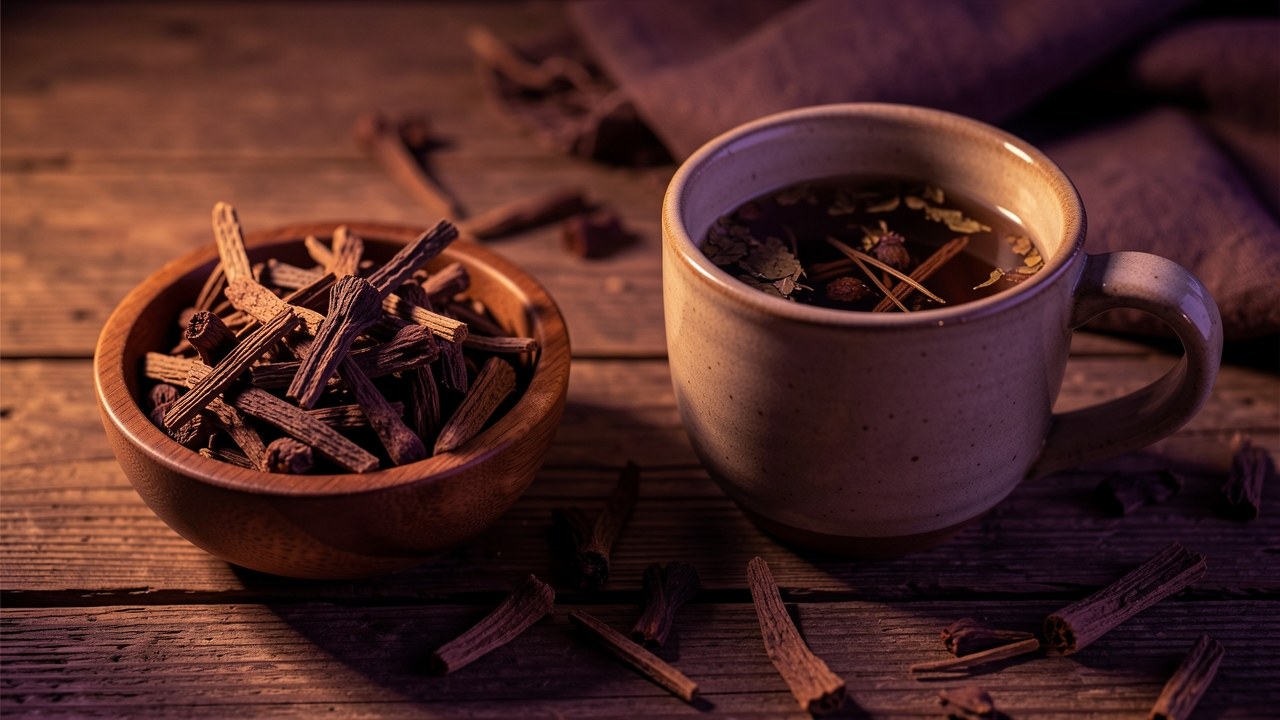
What Is Valerian Root?
Valerian is a flowering plant native to Europe and Asia, and it has since spread to parts of North America. While the plant’s flowers are pretty, the part used for tea is the dried root, not the petals.
Valerian root has a long history of use as a natural sleep aid. Its characteristic earthy, pungent aroma is a clue to its strong compounds.
- Botanical name: Valeriana officinalis
- Tea is made from dried roots
- Contains active compounds like valerenic acid and valepotriates
Sources: Cleveland Clinic, Ubie Health, Tea with Tae
Traditional use
Valerian root has been used for centuries to promote calm and sleep. It contains active compounds such as valerenic acid and valepotriates, which are believed to increase the availability of GABA, a neurotransmitter that helps calm the brain.
Clinical evidence on valerian is mixed. Some studies show that valerian may help you fall asleep faster and improve sleep quality, while other studies have found no significant benefit. Effects may also require regular use. The American Academy of Sleep Medicine advises against the use of valerian root for treating chronic insomnia due to a lack of evidence for its effectiveness and safety.
- Valerian’s calming effects may be due to increasing GABA availability.
- Some studies report improved sleep, but others show no effect.
- Regular use over time might be necessary to notice benefits.
Sources: Sleep Foundation, Ubie Health
How to Brew Valerian Root Tea
To prepare valerian root tea, use about 2 to 3 grams of dried valerian root and steep it in hot water for 10 to 15 minutes. You can find dried root in bulk or in pre-packaged tea bags.
Because the taste is strong, you may want to start with a smaller amount and adjust according to your preference. Always follow the product’s instructions if you are using a commercial tea.
- Measure 2–3 grams (about 1 teaspoon) of dried valerian root.
- Place it in a tea infuser or directly in a cup.
- Pour 1 cup (240 ml) of hot water over the root.
- Cover and steep for 10–15 minutes.
- Strain, sweeten if desired, and drink warm.
Sources: Healthline
Timing for Sleep
For sleep support, common dosages used in studies range from 300 to 600 milligrams of valerian root extract, usually taken once per day. When drinking tea, you’re getting a lower, less concentrated dose, but it can still be effective for some people.
It’s best to consume valerian root tea 30 minutes to two hours before bedtime. This allows enough time for the compounds to take effect.
- Most studies use 300–600 mg of dried root extract.
- Tea brewed with 2–3 grams of root provides a milder dose.
- Drink 30 minutes to 2 hours before bed.
Sources: Healthline, Sleep Foundation
Taste and How to Improve It
Valerian root has an earthy, pungent flavor that many people find unpleasant. If you struggle with the taste, you can blend it with other herbs.
Common additions include chamomile, lavender, lemongrass, and spearmint, which can mask the strong flavor and add their own soothing properties. Many commercial sleep teas combine valerian with these herbs.
- Try blending with chamomile or lavender.
- Add a slice of lemon or a bit of honey.
- Use a tea bag that already contains other herbs.
Sources: Ubie Health, Tea with Tae, Cleveland Clinic
Potential Side Effects and Who Should Avoid It
Valerian root is generally considered safe for short-term use up to 28 days in most adults. However, it can cause side effects for some people, including headache, dizziness, stomach upset, vivid dreams, and next-day drowsiness.
The following groups should avoid valerian root: children and pregnant or breastfeeding women. If you have any health condition, talk to your healthcare provider before using valerian.
- Side effects may include headache, vivid dreams, and drowsiness.
- Not recommended for children or pregnant/breastfeeding women.
- Safe for short-term use up to 28 days in most adults.
Sources: Sleep Foundation, Cleveland Clinic
Interactions With Medications and Other Substances
Valerian root can interact with sedatives and alcohol, and it may also interact with benzodiazepines, opiates, antihistamines, and barbiturates. These interactions can increase drowsiness or other effects, so it’s important to use caution.
If you are taking any prescription medication, especially for sleep, anxiety, or pain, consult your healthcare provider before combining them with valerian root. Also avoid drinking alcohol while using valerian.
- Do not combine with sedatives or alcohol.
- Possible interactions with benzodiazepines, opiates, antihistamines, and barbiturates.
- Always talk to your doctor if you take other medications.
Sources: Sleep Foundation
Frequently asked questions
Can I drink valerian root tea every night?
Valerian root is generally considered safe for short-term use up to 28 days in most adults. There is limited evidence on long-term safety, so it’s best to use it occasionally rather than every night without a break. If you’re considering nightly use for chronic insomnia, talk to your healthcare provider, as the American Academy of Sleep Medicine advises against it for this purpose.
Sources: Sleep FoundationHow long does valerian root take to work?
Valerian root tea should be consumed 30 minutes to two hours before bedtime for sleep support. Some people may notice effects within that window, while others may need to use it regularly over several days to see benefits. The research is mixed, and some studies show no effect.
Sources: Healthline, Sleep FoundationWill valerian root make me drowsy the next day?
Next-day drowsiness is a possible side effect of valerian root, though it doesn’t happen to everyone. Some people may feel groggy the morning after use. Start with a lower dose to see how you react, and avoid driving or operating machinery if you feel drowsy.
Sources: Cleveland ClinicIs valerian root tea safe during pregnancy?
Valerian root is not recommended for pregnant or breastfeeding women. There isn’t enough safety data, and health organizations advise against its use in these populations. Talk to your healthcare provider for alternative sleep support options.
Sources: Sleep FoundationCan valerian root be combined with other calming herbs?
Yes, valerian root is often combined with herbs like chamomile, lavender, lemongrass, and spearmint to improve flavor and enhance relaxation. A systematic review of limited studies suggests possible benefit, but evidence is mixed. It’s still important to consult with a healthcare provider if you’re taking other medications or have health conditions.
Sources: Cleveland Clinic, Tea with TaeSources
- Restless? Try These Bedtime Teas for Better Sleep — Cleveland Clinic
- Valerian Root for Sleep: Benefits and Side Effects — Sleep Foundation
- Valerian Root Dosage for Anxiety and Sleep — Healthline
- Sleep Tonight: Chamomile vs. Valerian Bedtime Teas Ranked | Ubie Doctor's Note — Ubie Health
- Valerian Root for Tea: An Overview — Tea with Tae