Why a consistent evening routine matters for sleep
Sleep doesn't respond to a single decision. It responds to signals, and those signals accumulate over the hours before bed. A steady evening sequence tells your body that the active part of the day is closing: the lights dim, the pace slows, the tasks stop, and a predictable set of actions begins.
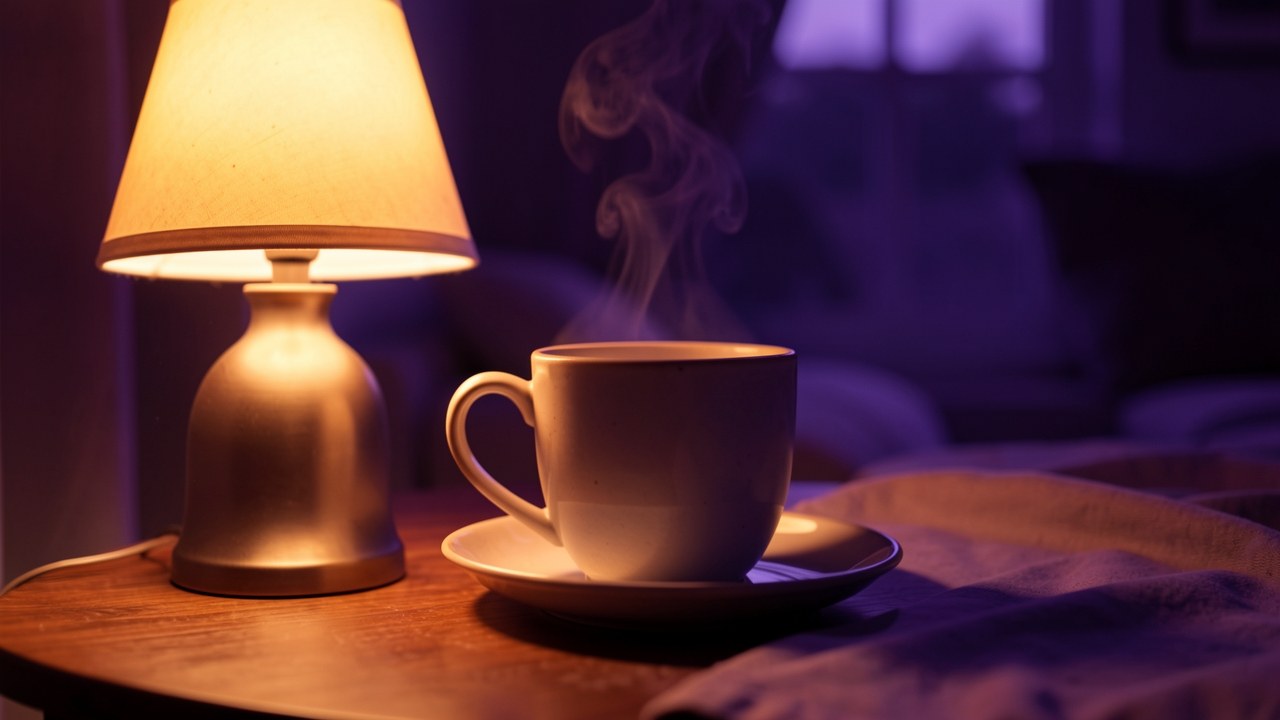
A cup of herbal tea fits into that sequence because it is slow by nature. Water has to heat, leaves or flowers have to steep, and the cup has to be drunk while it is still warm. That built-in delay is a feature, not an inconvenience. It creates a natural pause between the busy part of the evening and the part where you actually get into bed.
Consistency matters more than perfection. A routine you repeat most nights does more for you than an elaborate ritual you manage once a week. The goal is a reliable signal, not a performance.
- Keep the sequence short enough to repeat on an ordinary weeknight.
- Anchor the routine to a fixed time or to a fixed event, such as finishing the dishes.
- Protect the routine from optional additions that make it too long to maintain.
- Think of the tea as one part of the sequence, not the entire routine.
Sources: The Tea Spot, The Brothers Apothecary
Choosing the right herbal tea for your wind-down time
Herbal infusions, often called tisanes, are made from plant parts such as flowers, leaves, roots, fruits, seeds, or spices rather than from the Camellia sinensis plant. Because they are not made from that plant, they are naturally caffeine-free. That distinction is the main practical reason herbal infusions are the usual choice for an evening cup.
If you are new to herbal teas, start with flavor rather than with a specific goal. The cup you actually look forward to is the cup you will keep drinking, and the routine depends on repetition. Traditional evening herbs that appear repeatedly in tea writing include chamomile, lavender, valerian root, lemon balm, and peppermint.
- Chamomile: a mild, floral cup, probably the most familiar evening choice.
- Lavender: strongly aromatic; a small amount blends well with chamomile or lemon balm.
- Valerian root: earthy and potent in flavor; often blended with milder herbs.
- Lemon balm: light, citrusy, and easy to drink on its own.
- Peppermint: brisk and cooling; useful if you want something that feels less heavy than a floral blend.
Sources: Tea Life, The Tea Spot, The Brothers Apothecary, Kusmi Tea
What the herbs are traditionally associated with, and what that does and does not mean
Tea writing commonly frames the relationship between herbs and sleep as a traditional association and a matter of consumer experience rather than as treatment of a disease. That framing is worth keeping in mind when you read any claim about a specific herb.
Many popular explanations about how particular herbs work come from retailer and wellness content rather than from research verified here. Those explanations are widely repeated, but the underlying studies are not reproduced in this guide, so they should be treated as commonly shared beliefs about the herbs rather than as established findings.
The honest summary is this: the sensory and ritual experience of a warm, aromatic cup is well described, and the herb-to-effect claims that circulate widely are summaries of research rather than settled conclusions. Enjoy the cup for what it reliably provides, which is a warm, pleasant, caffeine-free pause.
| Herb | Typical flavor | How it is usually described |
|---|---|---|
| Chamomile | Mild, floral, slightly sweet | Calming association often mentioned in evening tea writing |
| Lavender | Strongly aromatic, perfumed | Often listed among herbs used in evening blends |
| Valerian root | Earthy, potent | Long history of use as a sleep aid according to retailer content |
| Lemon balm | Light, citrusy | Grouped with herbs commonly used in relaxation blends |
| Peppermint | Brisk, cooling | Grouped with herbs commonly used in evening teas |
Sources: Tea Life, The Tea Spot, The Brothers Apothecary
Optimal timing: when to drink your tea before bed
The most commonly repeated guidance is one to two cups of herbal tea drunk roughly 30 to 60 minutes before bed. That figure comes from a retailer's FAQs and is presented as usual practice rather than as a clinical recommendation, so treat it as a starting point you adjust rather than a rule you follow.
Two practical constraints should shape your personal timing. The first is liquid volume: a large mug right before you lie down may mean a nighttime trip to the bathroom, which defeats the purpose. The second is temperature and pace. If you drink the cup quickly and it is very hot, you may find it stimulating rather than settling.
A reasonable approach is to aim for the cup to be finished comfortably before you begin your final pre-bed steps, so the last thing you do is not swallowing the final mouthful and immediately turning off the light.
- Try starting your tea 45 to 60 minutes before your target bedtime.
- Choose a cup size you can finish without feeling overfull.
- Let the tea cool to a comfortable drinking temperature rather than rushing it.
- If you wake to use the bathroom, shift the tea earlier rather than eliminating it.
Sources: Tea Life
Building the tea ritual: preparation and environment
Preparation guidance in the supplied tea writing recommends near-boiling water, around 200 to 212 degrees Fahrenheit, for most herbal teas. That is hotter than the water often used for delicate green teas, which makes sense: roots, seeds, and tough plant material need more heat to infuse fully.
The same guidance recommends steeping herbal teas for 7 to 12 minutes, longer than the typical five-minute steep, and covering the cup while it steeps to help retain volatile oils. Covering the cup also keeps the tea warm, which matters if you are stretching the preparation into a deliberate pause rather than treating it as a quick task.
Environment is the other half of the ritual. Lower the lighting, silence notifications, and clear the surface you are going to sit at. These are small changes, but they are the ones that turn making tea from a chore into a boundary between the working evening and the resting one.
- Fill the kettle and heat water to roughly 200 to 212 degrees Fahrenheit.
- Measure your herbs or place one tea bag in a cup or small pot.
- Pour the hot water over the herbs and cover the cup.
- Steep for 7 to 12 minutes, depending on the herb and how strong you like it.
- Dim the lights and put your phone out of reach while the tea steeps.
- Remove the herbs or bag, sit down, and drink the tea without multitasking.
Sources: Tea Life, The Tea Spot, The Brothers Apothecary
Complementary activities to pair with your tea
The tea itself is a small part of the evening. What you do while you drink it determines whether the routine actually slows you down. Sources describe the warmth, aroma, and surrounding preparation as part of the appeal of an evening wind-down, which suggests the value lies in the whole experience rather than in the liquid alone.
Choose activities that are easy to stop. Reading a paper book, listening to quiet music, writing a short list of tomorrow's tasks so they are out of your head, or simply sitting without a screen are all low-effort options. The common thread is that none of them demand a decision in the last thirty minutes before bed.
What you pair with the tea matters as much as what you avoid. Scrolling, answering messages, or starting a new episode of something gripping all work against the signal you are trying to send.
- Reading something on paper rather than a backlit screen.
- Listening to music or ambient sound at a low volume.
- Writing tomorrow's short task list so it stops circulating in your head.
- Stretching gently or sitting quietly with the cup.
- A warm shower or bath before the tea, so the tea is the final step.
Sources: The Tea Spot, The Brothers Apothecary
Troubleshooting common disruptions to your routine
Routines break for predictable reasons, and most of them have a simple adjustment. If you forget the tea entirely, drink a smaller cup late rather than skipping the sequence, or simply go through the non-tea parts of the routine so the signal stays intact. If you are short on time, shorten the steep and drop the extras rather than abandoning the whole evening.
If the tea keeps you awake, the cause is more likely timing or volume than the herbs. Move the cup earlier, use a smaller mug, or switch to a lighter infusion. If you find yourself lying awake ruminating, the routine is not the problem to solve with more tea; that pattern is worth discussing with a healthcare professional.
If your schedule varies wildly from night to night, anchor the routine to an event rather than a clock time. Finishing dinner, cleaning the kitchen, or putting children to bed can all serve as the trigger, which makes the routine portable across different evenings.
- Forgot the tea: do the rest of the routine anyway, or have a small cup late.
- Short on time: cut the steeping short and skip the optional activities.
- Wide awake after the tea: move the cup earlier and reduce the volume.
- Routine feels stale: change the herb rather than the sequence.
- Schedule is unpredictable: anchor the routine to an event, not a time.
Sources: Tea Life, The Brothers Apothecary
Sample evening routine schedules for different preferences
The schedules below are illustrative patterns built from the timing, preparation, and ritual guidance described above. They are examples to adapt, not prescriptions. Pick the shape that matches your evening and adjust the details.
The early wind-down suits people who finish work or dinner well before bed. The compact version suits people who get home late. The no-tea-in-bed version suits anyone who finds that liquid close to bedtime disrupts their night.
Each schedule keeps the same underlying structure: stop the active day, make the tea slowly, sit with it, and then move to bed. The variations are about how much time you have, not about a different method.
| Time before bed | Early wind-down | Compact version | Tea earlier, bed later |
|---|---|---|---|
| 90 minutes | Dim lights, tidy the kitchen, start the kettle | Not applicable | Not applicable |
| 60 minutes | Tea steeps 7 to 12 minutes; read on paper | Start the kettle and steep a smaller cup | Tea finished; move on to quiet activity |
| 45 minutes | Sit and drink the tea without a screen | Drink the tea while writing tomorrow's list | Not applicable |
| 30 minutes | Wash up, lay out tomorrow's things | Wash up, lights down | Wash up, lights down |
| 15 minutes | Stretch, lights out | Stretch, lights out | Stretch, lights out |
Sources: Tea Life, The Tea Spot, The Brothers Apothecary
Frequently asked questions
How long before bed should I drink my herbal tea?
The most commonly repeated guidance is 30 to 60 minutes before bed, with one to two cups described as typically sufficient for most people. That figure comes from a tea retailer's FAQ rather than from a clinical guideline, so use it as a starting point. If you tend to wake during the night to use the bathroom, shift the cup earlier rather than cutting it out entirely.
Sources: Tea LifeCan I drink herbal tea every night as part of my routine?
Daily use is the way most people describe an evening tea ritual, and the routine depends on repetition to work as a signal. If you have a medical condition, take medications, or are pregnant or breastfeeding, check with a healthcare professional before making herbal tea a nightly habit.
Sources: Tea LifeWhat if I forget to drink my tea at the planned time?
Run the rest of the routine anyway. The point of the sequence is the signal it sends, and the non-tea parts—dimming lights, putting the phone away, sitting quietly—carry most of that signal. If you still want the cup, make a smaller one and drink it slowly rather than skipping straight to bed.
Sources: The Tea Spot, The Brothers ApothecaryShould I avoid screens while drinking my evening tea?
Keeping the screen out of reach while you drink is a simple way to protect the pause the ritual creates. The sources describe the warmth, aroma, and preparation as the appeal of an evening cup, and that experience is hard to notice while scrolling. Reading on paper, listening to music, or just sitting with the cup keeps the tea as the activity rather than a background task.
Sources: The Tea Spot, The Brothers ApothecaryHow can I make my tea ritual more calming when I'm short on time?
Shorten rather than skip. Use a smaller cup, steep for the shorter end of the 7 to 12 minute range, and drop the optional activities. The covered steep still gives you a few minutes of enforced pause, which is often enough to mark the end of the active day. What matters is that the sequence stays recognizable, not that it takes a full hour.
Sources: Tea Life, The Brothers ApothecaryDo I need special equipment to make herbal tea?
No. A kettle, a cup, and either a tea bag or a simple infuser will do. The preparation guidance recommends near-boiling water around 200 to 212 degrees Fahrenheit and a steep of 7 to 12 minutes, with the cup covered to help retain volatile oils. A saucer or small plate over the cup accomplishes the same thing as a dedicated lid.
Sources: Tea LifeWhich herbal tea should I start with if I've never had one?
Start with chamomile if you want something mild and familiar, or lemon balm if you prefer a lighter, citrusy cup. Chamomile, lavender, valerian root, lemon balm, and peppermint are the herbs most consistently described in tea writing as evening and relaxation choices. Flavor is the practical criterion at the start, because the cup you enjoy is the cup you will keep making.
Sources: Tea Life, The Tea Spot, The Brothers Apothecary, Kusmi TeaIs a warm drink actually helpful, or is it just the habit?
Both explanations are reasonable, and they are not mutually exclusive. The sources describe the warmth and aroma of the cup and the surrounding preparation as part of the appeal of an evening routine, which is a statement about the experience rather than a measured sleep outcome. The routine itself, repeated consistently, is what turns the cup into a signal that the day is ending.
Sources: The Tea Spot, The Brothers ApothecarySources
- Evening Wind-Down Routine: Herbal Tea, Timing, and Screen-Free Habits — Tea Life
- Evening Routine Reset — The Tea Spot
- Evening Tea Rituals: Building a Calming Practice for Better Sleep — The Brothers Apothecary
- Our 6 tips for an evening routine that promotes sleep — Kusmi Tea