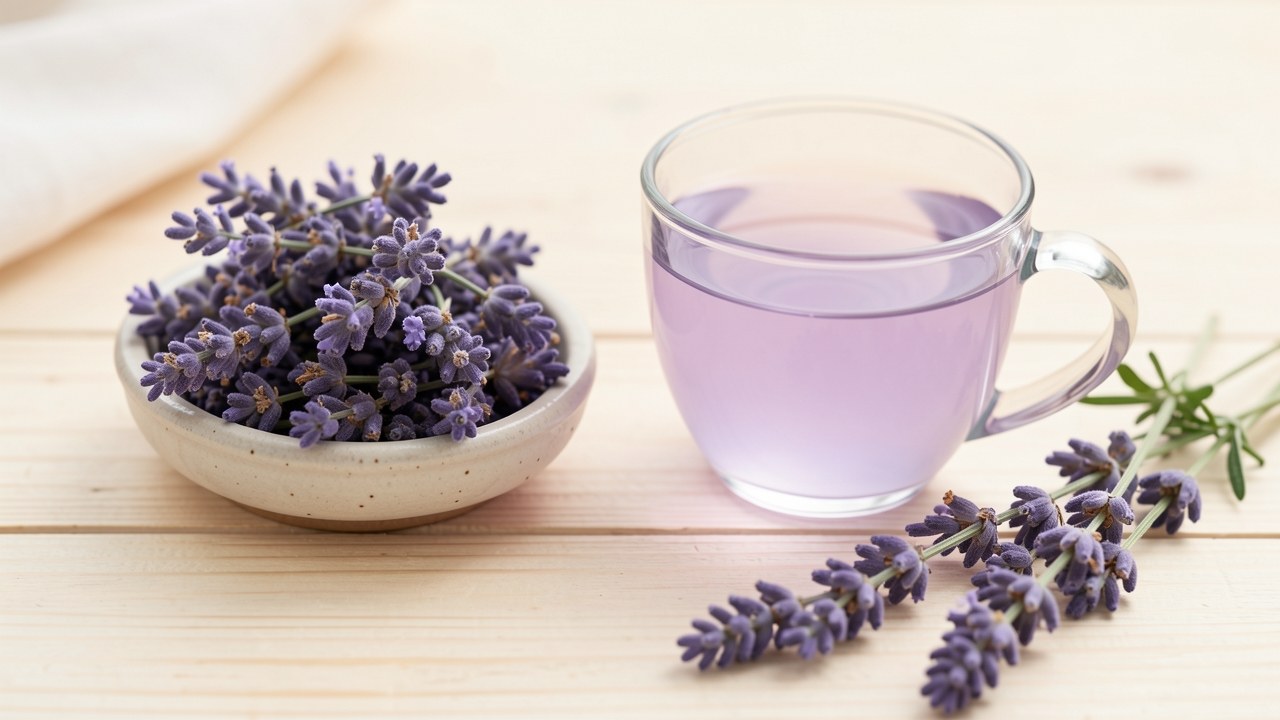
Why Lavender Is Used for Relaxation
Lavender tea is made by steeping the dried purple buds of the Lavandula angustifolia plant in hot water. Unlike black or green tea, it contains no caffeine, making it a natural choice for a wind-down drink.
The plant's aromatic compounds, especially linalool and linalyl acetate, are often associated with a mild calming effect. Most research on lavender has focused on extracts or aromatherapy rather than the tea itself, but the potential for relaxation is a key reason it has become a popular evening beverage.
Sources: Thés & Traditions, Healthline
Choosing Culinary-Grade Lavender
For a pleasant cup, choose lavender that is labeled culinary grade. This means it is intended for food use. It does not necessarily mean pesticide-free, so if avoiding pesticides matters to you, look for organic lavender or buy from a trusted supplier.
The buds should be a vibrant purple and have a strong, sweet fragrance. Avoid lavender sold for sachets or essential oil production, as it may not be safe for ingestion.
Sources: Gardenia.net
How to Brew Lavender Tea
Brewing lavender tea is simple and requires only dried flowers and hot water. Use about 1 teaspoon (roughly 2 grams) of dried lavender buds per 250 milliliters of water.
Heat the water to just below boiling, around 90°C (195°F). Pour it over the lavender in a cup or teapot, then cover the vessel to keep the essential oils from escaping. Let it steep for 5 to 7 minutes, then strain and enjoy.
- Water temperature: 90°C (195°F)
- Amount: 1 teaspoon per 250 ml cup
- Steep time: 5 to 7 minutes
Sources: Thés & Traditions
Flavor Profile and What to Blend It With
High-quality lavender has a floral, slightly sweet, and earthy flavor with a clean, minty finish. Using too much can make it taste bitter and soapy, so stick to the recommended amount.
You can blend lavender with other herbs to soften its perfume and create new flavor combinations. For sleep, lavender pairs well with lemon balm or lime blossom. If you prefer a bolder cup, try mixing it with chamomile or a pinch of mint.
- Lemon balm
- Lime blossom
- Chamomile
- Mint
Sources: Thés & Traditions, Buddha Teas
Calming Aroma and Its Role in Evening Rituals
The aroma of lavender is a key part of its relaxing effect. In a 2015 study, new mothers who drank 1 cup of lavender tea daily for two weeks and took time to appreciate its aroma reported less fatigue and depression than those who did not. This suggests that the scent itself contributes to the tea's calming reputation.
Making lavender tea part of a slow evening ritual—brewing a cup, sitting quietly, and inhaling the floral steam—can help signal to your body that it is time to relax.
Sources: Healthline
Potential Side Effects and Who Should Avoid It
Lavender tea is generally well tolerated, but it is not for everyone. If you are pregnant, consult your healthcare provider before drinking lavender tea; authoritative safety limits are not established in the reviewed research. There is limited data on its safety while breastfeeding, so it is best to talk to your doctor.
Use caution with children under 6, and consult a pediatrician before giving lavender tea. People with low blood pressure or those taking sedative medications should also be careful, as lavender might enhance these effects. Always consult a healthcare provider before adding any herbal tea to your routine, especially if you have a medical condition or are taking medication.
- Pregnancy: consult healthcare provider
- Breastfeeding: limited data, consult doctor
- Children under 6: use caution, consult pediatrician
- Low blood pressure or sedative medications: potential interactions
Sources: Thés & Traditions
Lavender Tea Blends for Sleep
If you want an extra dose of calm before bed, try combining lavender with other relaxing herbs. Two classic blends are lavender with lemon balm and lavender with lime blossom.
You can also create your own blend using equal parts of each herb, or adjust ratios to taste. Start with 1 teaspoon of the blend per cup, brew as you would plain lavender tea, and enjoy about 30 minutes before bed.
Remember that the research on lavender's sleep benefits is still emerging, and results vary from person to person.
Sources: Thés & Traditions
Frequently asked questions
Is lavender tea safe to drink every day?
For most adults, drinking a cup or two of lavender tea daily is considered safe based on general use. However, if you are pregnant, breastfeeding, have low blood pressure, or take sedative medications, check with your doctor first. Always use culinary-grade lavender and stick to the recommended amount, usually 1 teaspoon per cup.
Sources: Thés & TraditionsCan I use lavender essential oil in my tea?
No. Essential oils are highly concentrated and should not be ingested without medical supervision. It is not safe to add essential oil to tea. Instead, use dried culinary-grade lavender buds, which are specifically meant for food.
Sources: Thés & TraditionsWhat does lavender tea taste like?
Lavender tea has a floral, slightly sweet, and earthy flavor with a clean, minty finish. If you brew it too long or use too much lavender, it can become bitter and soapy.
Sources: Buddha TeasHow much lavender should I use per cup?
Use about 1 teaspoon of dried lavender buds (around 2 grams) per 250-milliliter cup. Using more than that can lead to a bitter, soapy taste.
Sources: Thés & TraditionsDoes lavender tea really help you sleep?
Some studies suggest lavender may promote calm and improve sleep, but research on lavender tea specifically is limited. One study in older adults found that drinking two cups of lavender tea twice daily for two weeks reduced anxiety and depression compared to a placebo. Another study in new mothers found that drinking lavender tea daily improved their mood. So there is reason to believe it helps, but more research is needed.
Sources: HealthlineSources
- Lavender Herbal Tea: the Sleep and Relaxation Flower — Thés & Traditions
- 4 Benefits of Lavender Tea and Extracts and How to Prepare — Healthline
- Lavender Tea Benefits: Relaxation & Flavor Guide — Buddha Teas
- Sip Your Way to Calm: How to Make Lavender Tea + Top Benefits — Gardenia.net