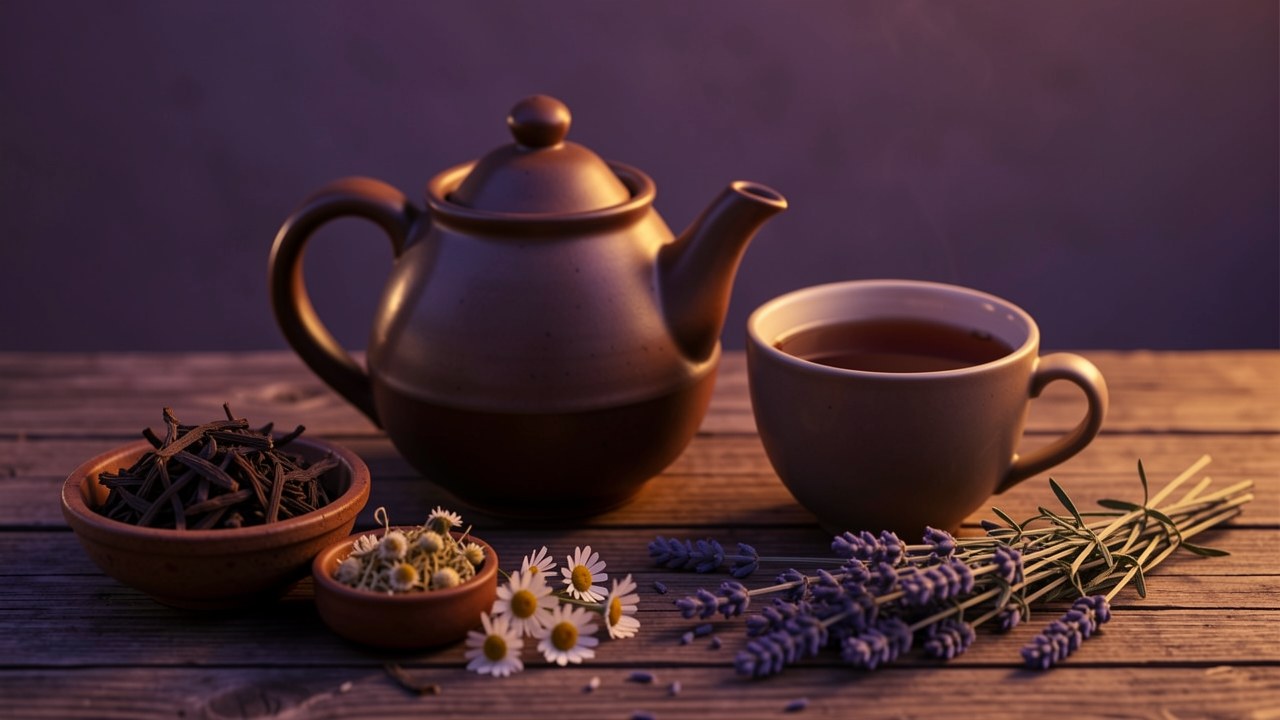
Why make your own sleep tea blend
A homemade sleep tea blend lets you adjust flavor and strength to your own taste. Store-bought blends often contain a long ingredient list, and you may want to know exactly what is in your cup. Blending at home also lets you leave out anything you would rather avoid or that does not sit well with you.
The herbs used in sleep blends are typically caffeine-free when they come from plants other than Camellia sinensis or similar caffeine-containing species. That is one reason a cup of herbal tea fits naturally into an evening wind-down routine. If you want to read more about how individual herbs are used, see our pages on valerian root and chamomile.
- You control the ingredients and can skip anything you dislike.
- You can adjust the ratio of a strong-tasting herb such as valerian.
- Herbal infusions made from non-tea plants are naturally caffeine-free.
Sources: Kucha Tea, Tea Blend Guide, YIFANG (Guangdong Yifang Pharmaceutical Co., Ltd.)
Key herbs for sleep
The herbs most often named for sleep and relaxation are chamomile and lavender, which appear across many independent sources. Chamomile flowers have been used for many years to treat poor sleep and contain several active compounds, including apigenin. Lavender is a purple flowering herb used since the Roman empire and can be drunk as a tea. Lemon balm, also known as Melissa officinalis, is a mint-family herb with a sweet, citrusy smell. Valerian root is traditionally used as a sleep and stress aid, and is traditionally described as having a stronger, more sedative-like effect than milder herbs such as chamomile, though this comparison is based on traditional use rather than clinical comparison. According to the Sleep Foundation, passionflower contains certain flavonoids that may bind to the same receptors in the brain as benzodiazepines and may help reduce symptoms of anxiety.
- Chamomile: traditional evening herb; contains apigenin and other compounds.
- Lavender: floral, aromatic herb used in tea and aromatherapy.
- Valerian root: earthy, strong-smelling root traditionally taken for a stronger nighttime effect.
- Lemon balm: mild, lemony mint-family herb often used for restlessness.
- Passionflower: traditionally used for anxiety and sleep support; its flavonoids are reported to bind to benzodiazepine receptors.
Sources: Sleep Foundation, Kucha Tea, Tea Blend Guide
Blending principles for sleep teas
In traditional herbal practice, herbs are often combined rather than used singly so that they complement one another. A common approach is to build a blend around a gentle base herb, add a small amount of a stronger herb, and finish with something aromatic for flavor. Lavender pairs well with chamomile, rose or lemon balm. Valerian is traditionally paired with herbs such as chamomile, lavender and peppermint to make its aroma more subtle and more palatable.
A bedtime blend should not include stimulant herbs or caffeinated plant materials such as green tea or black tea. It is also worth remembering that herbal sleep preparations are generally described as working best when used regularly and consistently over time rather than as a one-off.
- Start with a gentle base herb such as chamomile or lemon balm.
- Add a stronger herb such as valerian in a smaller proportion.
- Use lavender or mint to soften an earthy or bitter note.
- Avoid green tea, black tea and other caffeinated ingredients.
Sources: Kucha Tea, Floèm, Tea Blend Guide, Catalyst Tea Company, YIFANG (Guangdong Yifang Pharmaceutical Co., Ltd.)
Five sleep tea blend recipes
The recipes below are recipe ideas for a bedtime cup rather than fixed formulas. They are built from commonly used sleep herbs and suggested ratios so you can adjust them. A typical starting point suggested by one retailer is about 2 teaspoons of dried herbs per 250 ml of water. For each recipe, combine the dried herbs in a small bowl, stir gently, then store the mix in a tightly closed container away from light and heat. Use 1 to 2 teaspoons of the finished blend per cup of hot water, following the brewing steps in the next section.
- Simple Chamomile: 2 parts chamomile flowers, 1 part lemon balm leaf. To make: measure 4 teaspoons dried chamomile and 2 teaspoons dried lemon balm into a bowl. Stir gently until evenly mixed, then transfer to an airtight jar.
- Lavender Wind-Down: 2 parts chamomile flowers, 1 part lavender buds, 1 part rose petals. To make: measure 4 teaspoons chamomile, 2 teaspoons lavender buds and 2 teaspoons rose petals. Mix gently, then store in a labeled jar.
- Valerian Nightcap: 1 part valerian root, 2 parts chamomile flowers, 1 part peppermint leaf. To make: measure 2 teaspoons valerian root, 4 teaspoons chamomile and 2 teaspoons peppermint. Stir to combine, then seal in an airtight container and use within a few weeks.
- Passionflower Calm: 1 part passionflower, 1 part chamomile flowers, 1 part lemon balm leaf. To make: measure 2 teaspoons of each herb into a bowl. Mix thoroughly and store in a cool, dark place.
- Lemon Balm and Lavender: 2 parts lemon balm leaf, 1 part lavender buds. To make: measure 4 teaspoons lemon balm and 2 teaspoons lavender. Toss gently until blended, then keep in a tightly closed jar.
Sources: Sleep Foundation, Kucha Tea, Floèm, Tea Blend Guide
How to brew your sleep blend
Brewing guidance for sleep teas varies between sources, so the steps below describe commonly given ranges rather than a single standard. For flowery herbs such as chamomile and lavender, a commonly given water temperature is around 200°F (93°C) or just below boiling, with steeping times of about 4 to 7 minutes. For root herbs such as valerian, a commonly given instruction is near-boiling water around 212°F (100°C) and roughly 10 minutes of steeping. A general instruction for sleep herbal teas is to steep for about 10 minutes; shorter steeping may not fully release the herbs' compounds, while longer steeping can make some teas bitter.
A widely repeated serving suggestion is to drink the tea 30 to 60 minutes before bedtime. This is general guidance, not personalized medical advice, and you should adjust the timing to what feels right for you. For more on brewing technique in general, see our guide on how to brew.
- Measure 1 to 2 teaspoons of your dried blend into a teapot or infuser.
- Heat fresh water to the temperature that suits your herbs: around 200°F (93°C) for flowers and leaves, or near boiling for roots.
- Pour the water over the herbs and cover the cup to keep the aromatic oils in.
- Steep for about 4 to 7 minutes for flowery blends, or up to 10 minutes for blends containing valerian root.
- Strain and drink while warm, ideally 30 to 60 minutes before bedtime.
Sources: Floèm, Tea Blend Guide, Brew Your Sip, YIFANG (Guangdong Yifang Pharmaceutical Co., Ltd.)
Storing and using your blends
Dried herbs lose aroma and flavor over time, so store your blends in a tightly closed container in a cool, dark place. Keep a small amount in a labeled jar for daily use and refill it from a larger container when needed. Light, heat and moisture all speed up the decline of dried herbs and flowers.
If a blend contains valerian root, its strong odor can become more noticeable as it sits. One option is to make valerian-containing blends in smaller batches and use them within a few weeks. You can also adjust the flavor of a finished cup with honey or maple syrup, which is often suggested for valerian's earthy taste. When you find a blend you like, write down the ratio so you can mix it again.
- Use a tightly closed container in a cool, dark spot.
- Label each blend with the date you made it.
- Make small batches of valerian blends and use them within a few weeks.
- Honey or maple syrup can soften an earthy or bitter taste.
Sources: Sleep Foundation, Tea Blend Guide
Safety notes for sleep herbs
Although they are natural, sleep herbs are not suitable for everyone and may interact with medications, alcohol or other supplements. Individuals who are pregnant or breastfeeding, or who have medical conditions or take medications, should consult a qualified healthcare professional before using sleep herbs. Some sources report that valerian root may cause headaches in sensitive individuals. This page is general information, not a substitute for advice from your healthcare provider.
Some herbs traditionally used for sleep in Chinese medicine include chrysanthemum, jujube seed, goji berry, licorice root and lotus seed. In that tradition, licorice root is described as a harmonizing herb that improves flavor and enhances the effects of other herbs. This framing is specific to traditional Chinese medicine and is not a general recommendation for a Western bedtime routine.
- Check with a healthcare professional if you are pregnant, breastfeeding, taking medication or managing a medical condition.
- Sleep herbs may interact with alcohol or other supplements.
- Some sources report that valerian root may cause headaches in some people.
- Traditional Chinese medicine sleep herbs are part of a different tradition and are not universal recommendations.
Sources: Sleep Foundation, Floèm, Catalyst Tea Company, Brew Your Sip, YIFANG (Guangdong Yifang Pharmaceutical Co., Ltd.)
Frequently asked questions
Which herbs are best for a homemade sleep tea?
The most commonly named herbs for sleep and relaxation tea blends are chamomile and lavender, which appear across many sources. Chamomile has been used for poor sleep for many years, and lavender is a floral herb traditionally taken as a tea. Other options include lemon balm, passionflower and valerian root. Valerian is traditionally described as having stronger sedative-like effects, so it is often blended with gentler herbs.
Sources: Sleep Foundation, Kucha Tea, Tea Blend GuideHow much of each herb should I use in a sleep blend?
As a rough guideline, one retailer suggests about 2 teaspoons of dried herbs per 250 ml of water. In a blend, a common approach is to use a gentle base herb such as chamomile or lemon balm as the largest part, and a stronger herb such as valerian as a smaller part, often around one part to three or four parts of the base. These amounts are commonly given guidance rather than a fixed rule, so adjust them to your taste.
Sources: FloèmCan I mix valerian with chamomile?
Yes, valerian is traditionally paired with chamomile. Blending valerian with chamomile, lavender or peppermint is a common way to make its strong, earthy aroma more subtle and more palatable.
Sources: Kucha Tea, Tea Blend GuideHow long should I steep a sleep tea blend?
A commonly given instruction for sleep herbal teas is to steep for around 10 minutes. Shorter steeping may not fully release the herbs' compounds, while longer steeping can make some teas bitter. For flowery blends such as chamomile and lavender, some sources suggest 4 to 7 minutes, and for root herbs such as valerian, around 10 minutes in near-boiling water.
Sources: Floèm, Brew Your SipWill these blends make me drowsy the next morning?
The sources used for this page do not report next-morning drowsiness from drinking herbal sleep teas. Any effect is likely to vary from person to person. If you feel unusually drowsy after trying a blend, especially one containing valerian, stop using it and speak with a healthcare professional.
Sources: Sleep Foundation, Catalyst Tea CompanySources
- The Best 7 Teas for Sleep — Sleep Foundation
- Tea for Sleep: Four Herbal Blends That Drift Us Off to La-La Land — Kucha Tea
- Top 4 Herbal Teas for Better Sleep and Deep Relaxation — Floèm
- Herbal Tea Blends for Relaxation: Natural Remedies for a Calm Mind - Tea Blend Guide — Tea Blend Guide
- How to Choose Herbal Teas for Body and Mind Relaxation — Catalyst Tea Company
- Best Caffeine-Free Teas for Sleep: Herbal Blends for Deep Rest — Brew Your Sip
- Chinese Herbal Teas for Better Sleep and Relaxation - YIFANG — YIFANG (Guangdong Yifang Pharmaceutical Co., Ltd.)