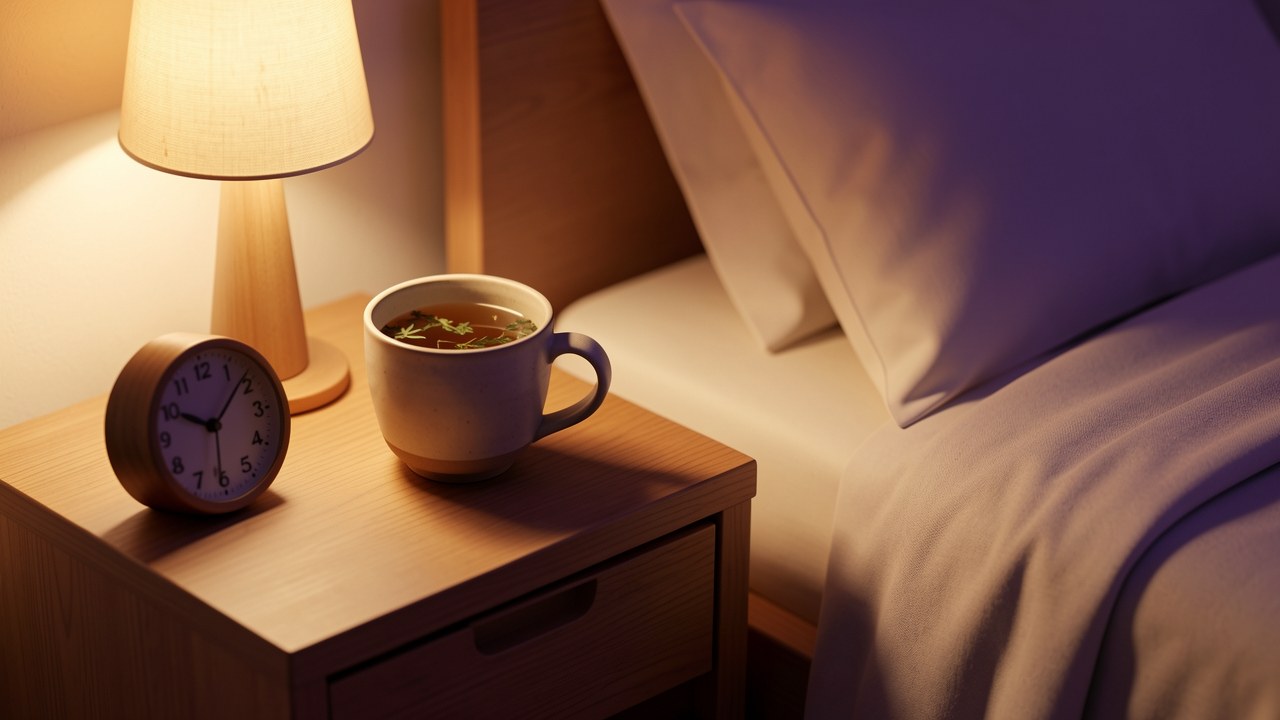
Why timing matters for calming teas
Drinking herbal tea before bed is not just about what is in the cup. When you drink it shapes how well it works for you. If you sip too close to lights out, you may still be digesting or heading to the bathroom just as you want to be drifting off. If you drink too early, the calming routine may wear off before you are ready to sleep.
The evidence from tea brands, sleep-focused sites, and one academic medical center converges on a practical window of roughly 30 to 60 minutes before bed for a caffeine-free herbal tea. This gives the warm drink time to settle and lets the ritual become a signal that sleep is coming. For people who wake at night to urinate, some guidance suggests finishing fluids earlier, about two hours before bed.
Sources: Floèm, Tea Life, Art of Tea, Cleveland Clinic (Health Essentials), Sleep Care Online
The role of your body's sleep-wake cycle
Your body runs on a roughly 24-hour clock that influences when you feel alert and when you feel sleepy. In the evening, this system helps lower alertness and prepare you for sleep. A warm cup of tea can fit into that natural wind-down as a repeated cue, especially when you drink it at about the same time each night.
The benefits of bedtime tea appear to be partly chemical, from plant compounds with sedative effects, and partly behavioral, from the ritual of pausing before bed. That means timing is not only about ingredients. It is also about giving yourself a consistent, calming transition that your brain learns to associate with sleep.
Sources: Cleveland Clinic (Health Essentials)
Recommended times for different teas
Most bedtime teas are herbal, meaning they are made from herbs, flowers, roots, or fruit rather than from the tea leaf. These are naturally caffeine-free, so they are the best choice for the evening. Traditional teas from the tea plant, including black, green, white, oolong, and pu-erh, contain caffeine and are not ideal close to bedtime.
If you do drink a caffeinated tea in the evening, allow four to six hours between that cup and bedtime as a practical guideline. One source notes that caffeine has a half-life of roughly five to six hours, so a cup at 9 p.m. can still be circulating past midnight. Caffeine content varies: green tea is often listed at about 25 to 35 mg per cup, while black tea often carries about 40 to 70 mg per cup. Check labels to confirm you are choosing a caffeine-free option before bed.
- Herbal tea (chamomile, lavender, peppermint, valerian): caffeine-free; aim for about 30 to 60 minutes before bed.
- Traditional tea (black, green, white, oolong, pu-erh): contains caffeine; allow four to six hours before bed if you drink it in the evening.
- If you tend to wake to urinate, finish all fluids, including tea, about two hours before bed.
Sources: Art of Tea, Red Rose Tea, Nelson's Tea, Cleveland Clinic (Health Essentials), Sleep Care Online, Floèm, Tea Life
How much tea to drink in the evening
A modest cup is usually enough. One source recommends keeping the cup small so the warm drink has time to settle before sleep. Another suggests test-driving bedtime teas in smaller doses earlier in the evening to see how they feel. The goal is a gentle wind-down, not a large volume of liquid right before lying down.
If you are new to a particular herbal blend, start with a smaller cup and see how your body responds. Herbs that support sleep may build their effect over a week or two of consistent use, so give a new blend a fair trial before deciding it does not work for you.
How fluids before bed affect nighttime urination
Drinking any fluid close to bedtime can lead to waking up to use the bathroom, which interrupts sleep. For people who already get up more than once at night, one academic medical center suggests stopping teatime a couple of hours before bed. A sleep-focused site likewise advises finishing fluids, including sleepytime tea, about two hours before bed to reduce the chance of being woken by a full bladder.
If you find that a cup an hour before bed leads to a bathroom trip, try moving your tea earlier, to 90 minutes or even two hours before lights out. The exact cutoff depends on your own pattern. The key is to separate the calming ritual from the fluids that might disrupt your night.
Sources: Cleveland Clinic (Health Essentials), Sleep Care Online, Tea Life
A sample evening schedule with tea
Here is one way to structure an evening with tea. This is an illustrative rhythm, not a strict protocol. Adjust the times to fit your own bedtime and how your body responds.
About 60 to 90 minutes before bed, boil the kettle. Brew your herbal tea and let it cool slightly. Sip it slowly over 10 to 15 minutes. After you finish, move into your final pre-bed tasks, such as turning off screens, brushing your teeth, and dimming the lights. Aim to be in bed with lights out at your usual time. If you tend to wake to urinate, consider starting this routine two hours before bed instead.
- 60–90 minutes before bed: boil the kettle and brew your herbal tea.
- Let the tea cool slightly and sip it slowly over 10–15 minutes.
- After finishing, complete your final pre-bed tasks (screens off, teeth brushed, lights dimmed).
- Lights out at your usual bedtime.
Sources: Tea Life, Cleveland Clinic (Health Essentials), Sleep Care Online
Adjusting timing to your own routine
The best time to drink herbal tea before bed is the time that works for you. Start with the general window of 30 to 60 minutes before bed, or earlier if you tend to wake to urinate. Keep a simple note of when you drank your tea and how you slept for a week or two. That will help you see whether a shift makes a difference.
One source suggests a gentle self-experiment: move your last caffeinated tea one hour earlier, replace one evening cup with herbal tea, and keep everything else the same for a week. This can help you test whether timing affects your sleep without changing too many things at once.
Remember that tea is not a treatment for ongoing sleep problems. If you have trouble sleeping for a week or two, or if you have allergies, are pregnant, take medications, or have persistent sleep issues, talk to a healthcare provider. Herbal ingredients can have side effects. For example, people who are pregnant or allergic to ragweed, daisies, marigolds, or chrysanthemums should avoid chamomile tea. Valerian may cause vivid dreams, headaches, stomach upset, or next-morning drowsiness. Passionflower may cause dizziness or confusion, and lavender may cause skin irritation or hormonal effects with excessive use.
Sources: Art of Tea, Red Rose Tea, Cleveland Clinic (Health Essentials), Sleep Care Online
Frequently asked questions
How long before bed should I stop drinking tea?
If you are drinking a caffeine-free herbal tea, most guidance suggests finishing your cup about 30 to 60 minutes before bed. If you tend to wake up to use the bathroom, stop fluids, including tea, about two hours before bed. If you drink a caffeinated tea, allow four to six hours between that cup and bedtime.
Sources: Floèm, Art of Tea, Tea Life, Sleep Care OnlineIs it okay to drink tea while lying in bed?
It is better to finish your tea before you get into bed. Drinking while lying down may make it more likely that you will need to get up to use the bathroom, and it can blur the boundary between your wind-down routine and sleep. Sipping your tea in a chair or on the sofa, then moving to bed, helps reinforce the routine.
Sources: Art of Tea, Tea LifeDoes drinking herbal tea too late affect sleep quality?
It can if it leads to a bathroom trip or if the liquid sits heavily in your stomach. Herbal tea is caffeine-free, so it does not have the stimulating effect of traditional tea. But drinking a large cup right before bed may interrupt sleep. Moving your tea earlier in the evening, to about 30 to 60 minutes before bed, or up to two hours if you are prone to nighttime urination, can help you get the calming benefit without the disruption.
Sources: Art of Tea, Cleveland Clinic (Health Essentials), Sleep Care OnlineShould I avoid drinking tea after dinner?
You do not have to avoid it completely. If you want a calming herbal tea as part of your evening, it can fit after dinner. The main things to watch are caffeine and fluid volume. Choose a caffeine-free herbal tea, and if you tend to wake to urinate, finish your last cup about two hours before bed. If you drink a caffeinated tea after dinner, you may want to skip it or have it earlier, since caffeine can stay in your system for several hours.
Sources: Art of Tea, Red Rose Tea, Cleveland Clinic (Health Essentials)Can a warm drink before bed help me fall asleep faster?
A warm cup of herbal tea can be part of a relaxing bedtime routine. One source describes the benefits as partly chemical, from plant compounds with sedative effects, and partly behavioral, from the ritual of winding down. That said, tea is not a treatment for persistent sleep problems. If you have trouble sleeping for a week or two, or if you have concerns about herbal ingredients, talk to a healthcare provider.
Sources: Cleveland Clinic (Health Essentials)Sources
- Top 4 Herbal Teas for Better Sleep and Deep Relaxation — Floèm
- Tea Before Bed: The Best Bedtime Teas for Better Sleep – Art of Tea — Art of Tea
- Best Time To Drink Chamomile Tea Before Sleep – Tea Life — Tea Life
- Can’t Sleep? Your Evening Tea Might Be the Reason – Red Rose Tea — Red Rose Tea
- 8 Teas to Drink Before Bed for Better Sleep Quality — Nelson's Tea
- Restless? Try These Bedtime Teas for Better Sleep — Cleveland Clinic (Health Essentials)
- How Does Sleepytime Tea Work? | Sleep Care Online — Sleep Care Online